Startups
Founder-led sales in India: how to sell before your first sales hire
Founder-led sales in India: where your first pipeline comes from, how to turn deals into a playbook, and when to hire an account executive, not a VP.

· 9 min read
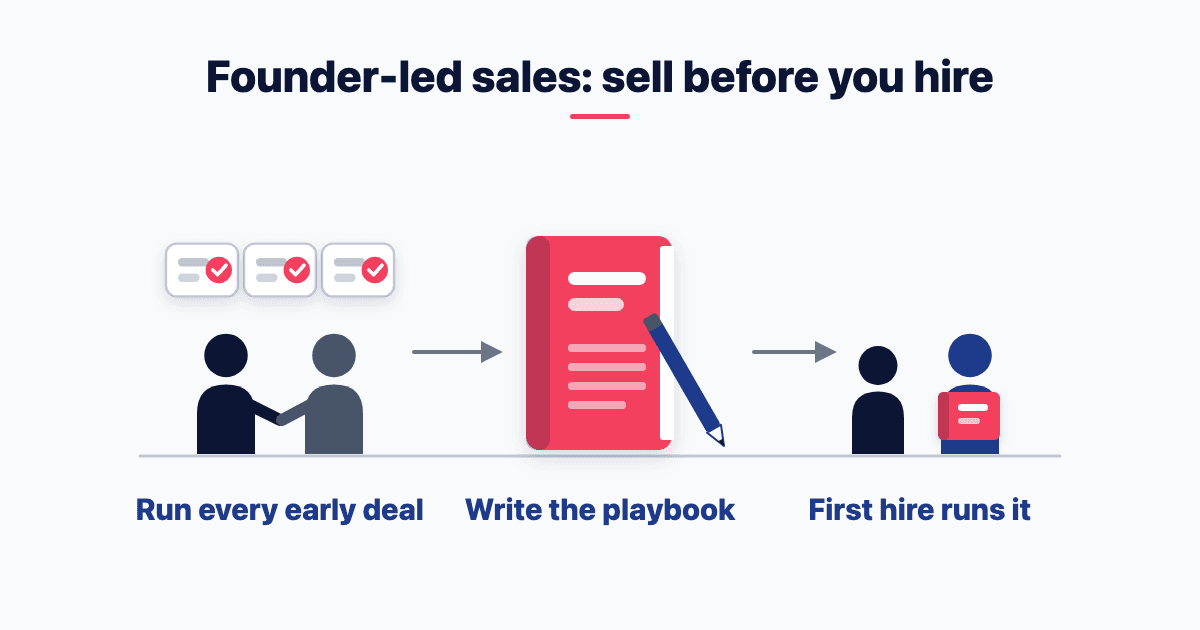
SaaStr's rule is to close at least 10 customers yourself before your first sales hire. The founder of a large Indian software-as-a-service company says hire an account executive (AE) on day zero. Both are right. Founder-led sales means you run every early deal until your wins repeat. Your first hire rides along and runs that playbook; they don't invent it.
What is founder-led sales, and why does India stretch it?
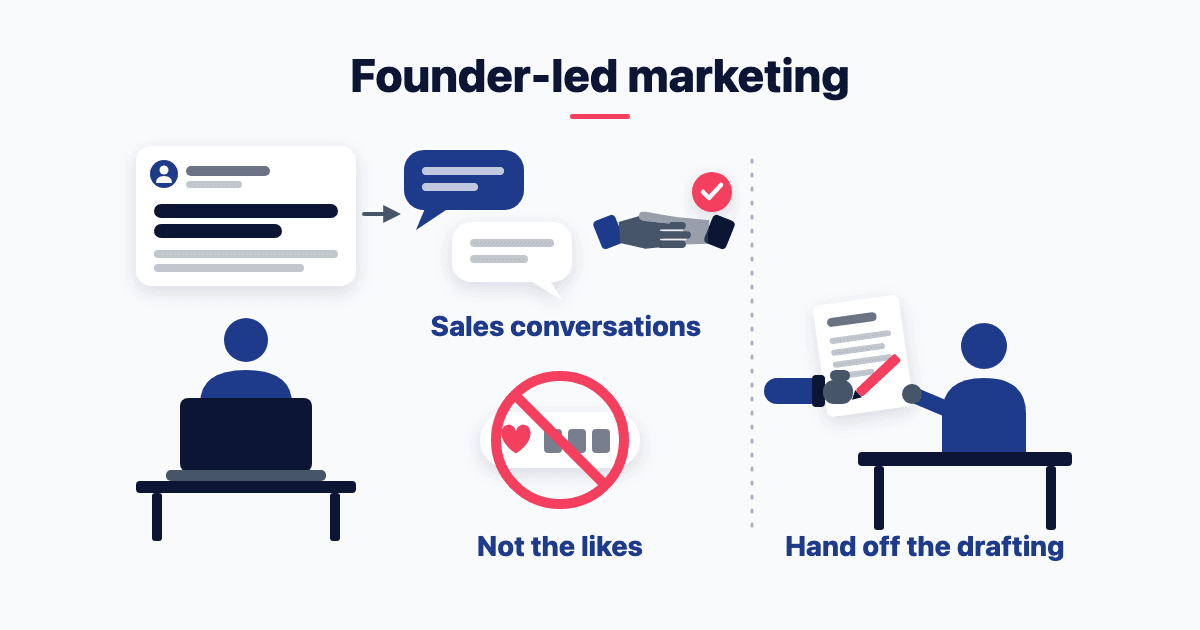
Founder-led sales is the stage where the founder personally finds, runs and closes every deal. You're collecting what no hire can give you: the buyer's words, their trigger and their objections. Marketing has a separate job at this stage; see what marketing should do before product-market fit.
India stretches this stage because enterprise buying here runs on trust. The founder I opened with explained why in Blume Ventures' 2024 guide to selling software to Indian enterprises. "They are taking a bet on your unproven software," he said. "The ability to call you for a quick issue resolution is hugely comforting." The buyer is judging you, not just the product.
Where does a founder's first pipeline come from in India?
From people, not ads. Work these five sources roughly in order.
Your own network. Ask for an introduction, not a purchase. Selling Smart, Blume's guide to selling software in India, calls this the founder's "home advantage": people from "school, college, or your previous workplace".
Mutual connections and industry rooms. The founder I opened with says: "First find a mutual connection who can introduce you." At conferences, he suggests attending a few, then getting a speaker slot, then a booth.
WhatsApp before email. He says some of his best deals started as WhatsApp messages. Senior buyers "are together in some WhatsApp groups or meet each other at industry events", Selling Smart notes.
Your posts. His company's first customer, Tata Docomo, "approached me after seeing a LinkedIn post", he says. That's one founder's story, not a channel plan.
Your first customers. After every delivery, ask the three debrief questions from my session 3 sheet. "What did we promise, and did we deliver?" "What would have made it a 10?" "When's the next one?"
They come from my rep training at OurBus Charters, a US coach-hire business. That's a sales team, not founders, but the questions travel.
How do you turn your deals into a sales playbook?
Write it while you sell, one deal at a time, because it's what your first hire will run. An Indian founder community, eChai, puts it simply: "a salesperson can't sell what you can't yet describe."
Keep it to five pages.
Who buys, and why now. Write it from your last wins and your losses.
The room. Map everyone who weighs in on each deal, using the Committee Map, one of ten Superhuman Sales frameworks. Its one question is "Who else weighs in on a decision like this?", never "Who decides?" In regulated sectors such as banking, insurance and healthcare, "add a regulator-shaped shadow".
The close plan. Send a Mutual Action Plan, a shared close plan the buyer edits. Hand them the pen: "What's missing? Who else needs to be in here?" Run it past signature to first use, because "Closing is usage, not signature."
Objections and your floor. List each objection in the buyer's words, the answer that worked, and the price you won't go below. For drafting help, use one AI prompt for each deal stage.
The numbers. Track the six numbers in my CRM Truth-Check: coverage, slippage, velocity, win rate, conversion by stage and cycle length. The same sales-prompts guide gives a Friday prompt that flags stale, duplicate and missing deals.
Put payment terms in the plan, not the invoice
Raise payment terms in the first meetings, "at the top of the funnel", as the same founder puts it. His example: you ask for 30 days, the buyer says 90, you settle on 60. His warning: "Money won't come before 60 days no matter what."
But the law protects a registered micro or small supplier. Under Section 15 of the Micro, Small and Medium Enterprises Development Act, 2006 (2006 Gazette text), a written term can "in no case" exceed 45 days from acceptance. With no written term, the buyer must pay within 15 days; interest runs from day 16.
Late payers owe compound interest, says the Ministry of MSME's Samadhaan portal on delayed payments. The rate is "three times of the bank rate notified by RBI", the Reserve Bank of India. Retail and wholesale traders are left out: a 2021 ministry order restricts their benefits to "Priority Sector Lending only".
The portal says applications are open to "Any Micro or small enterprise having valid Udyam Registration". So if you qualify, register before the buyer's vendor form arrives. New delayed-payment applications now go to a separate ministry portal.
This is not legal or financial advice. Parliament passed changes to the Act in August 2026, so check the current version with a chartered accountant.
When should you hire your first salesperson?
When your wins repeat, not when your calendar fills. The rules of thumb disagree on the count:
SaaStr (US): close "at least 10 customers yourself".
eChai (Indian site, US sources): "do at least ~50 demos and hit a win rate around 20% or higher before you hand it off". That's also about 10 wins.
Hustle Fund (US): hire once you've "onboarded 20-30 customers".
No study settles the number. These are opinions, not findings.
Hire when all four are true:
Your last few wins share a buyer and a trigger.
The five pages are written.
You track the six numbers.
You "can't service the pipeline anymore", in eChai's words.
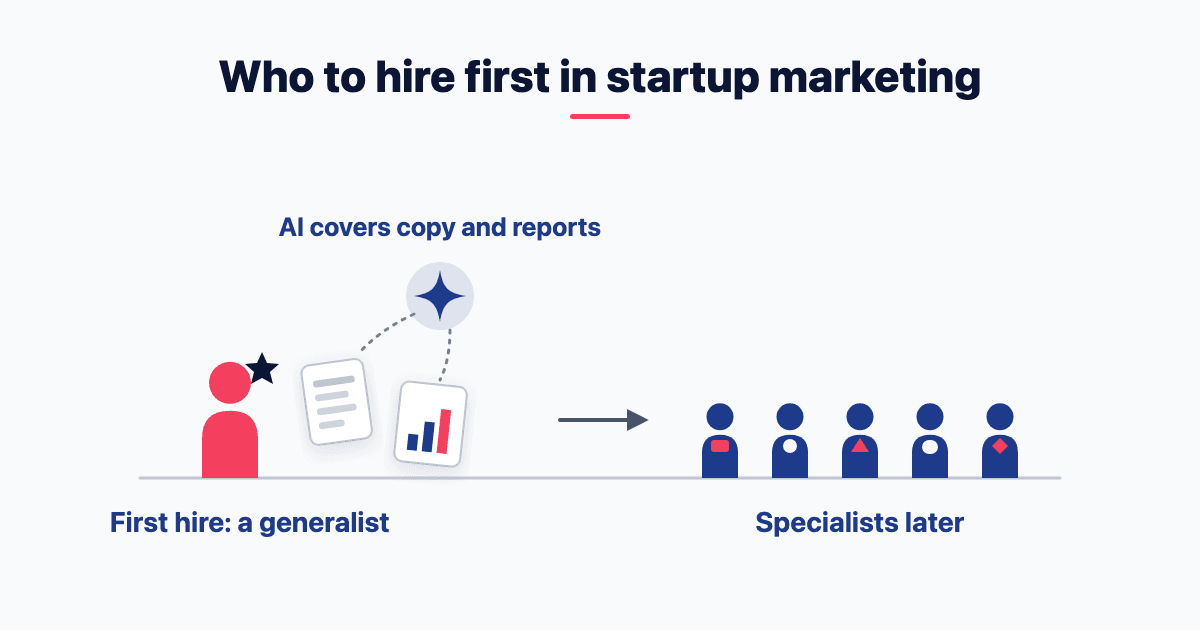
The India twist. The founder from the opening doesn't wait: "Unlike the US, get an AE on day zero." You open the door and take the first meeting. Then they "step in to run the deal and bring you in to close it."
So split the decision in two. A ride-along hire can come early. Handing over whole deals waits for repeatability, because a first hire "fails when they inherit a process you never proved" (eChai).
A worked readiness check (illustrative, not a salary benchmark). The same founder's 2024 rule of thumb puts new-sales quota at 10 times the account executive's salary: "This is a 1:10 ratio." My Truth-Check wants 3–5x coverage. I'll assume that's against one quarter's quota. Say you pay a rep ₹15 lakh a year:
Quota: ₹15 lakh × 10 = ₹1.5 crore a year, or ₹37.5 lakh a quarter.
Open pipeline at 3–5x a quarter's quota: ₹1.125–1.875 crore.
At a ₹5 lakh average deal: about 23–38 open deals.
Fewer live deals? A hand-off hire may run short of work. Fill the pipeline before the seat; my go-to-market and growth strategy work can help with that. Your first marketing hire is a separate decision.
Why an account executive, not a VP of sales?
A vice president (VP) of sales manages reps around a playbook that works. An account executive runs it.
Hustle Fund says: "But don't hire a Head/VP of Sales yet." Its reason: such hires "probably haven't been selling for a while and only have been managing others". In 2024, the same founder set India's bar higher. No VP until a ₹20 crore business, that is, 100 enterprise customers paying ₹20 lakh a year each. That's one founder's view.
Hire someone who has sold "at your deal size and to your buyer" (eChai). SaaStr says "Hire two reps, not one," so you can tell a weak rep from a weak process. In India, I'd start with one ride-along; two salaries before wins repeat is a big bet.
"I'm technical. I should hire someone who can sell."
eChai's founder-led sales hub answers a technical founder who hates selling and asks, "do I really have to do sales myself?" Its reply: "Yes, and you can't outsource it early."
Early selling is diagnosis, not persuasion. You're finding out who buys, why now and what stops them. A hire can run that process later, but nobody can discover it for you.
My Superhuman Sales page has one line for "Founders who sell": "A repeatable sales motion without hiring a sales ops team." That motion comes from written-down deals more than charm, and the five pages are where it starts.
What to do this month
List your last 10 deals, won and lost: buyer, trigger and days to close.
For every open deal, draw a Committee Map and send an editable Mutual Action Plan with payment terms in it.
If you qualify as a micro or small enterprise, get your Udyam Registration in place.
Track the six numbers every Friday.
Write the five pages.
Decide: a ride-along account executive now, or a hand-off hire once wins repeat.
Weighing that first hire? I'm happy to look over your five pages or your last 10 deals with you. Book a call.
Frequently asked questions
Should I give my first enterprise customer a free pilot?
Usually not. eChai's founder-led sales hub says "early on a short paid pilot is usually better, even a small fee proves they have real budget and intent." Write the pilot into your Mutual Action Plan as one milestone, with an end date and the go-live it leads to. A pilot with no next step is free work.
How is founder-led sales different when you sell from India to US buyers?
The basics hold, but trust is harder to earn. eChai's answer for Indian founders selling to US buyers is that "The fundamentals are identical, but the trust gap is bigger." It advises being "maniacally responsive" and using async video demos across time zones. Speed of reply does the work a visit would.
Can I outsource early sales to an agency or a lead-generation firm?
Not the selling itself, and not early: eChai's hub says you "can't outsource it early." Later, lead generation can move to someone else. Hustle Fund describes a sales development rep (SDR) who can "generate leads while AEs sell and support customers". Hand over meeting-setting only once your message reliably wins meetings.
Do founders stop selling after the first sales hire?
Not straight away, and in India perhaps never fully. Hustle Fund says to step back only "Once the AEs close customers at a predictable rate". An Indian software founder goes further: after 100 customers, "You'll still need to open the door for the largest relationships". Plan to keep the biggest accounts and hand over the repeatable middle.
- Startups
- Sales
- Founder-led sales
Written by Siddhesh Joglekar
Fractional CMO and AI marketing consultant Siddhesh Joglekar helps founders and growth-stage teams build marketing engines that compound.