Growth
App marketing strategy for Indian consumer apps: installs that turn into payers
"The era of explosive App volume is over," say Google's India app leads in AppsFlyer's 2025 India report. So an app marketing strategy for India starts at the payer. Build a listing per audience, bid on a payment signal, trace every link and judge cost per payer by cohort.
· 11 min read
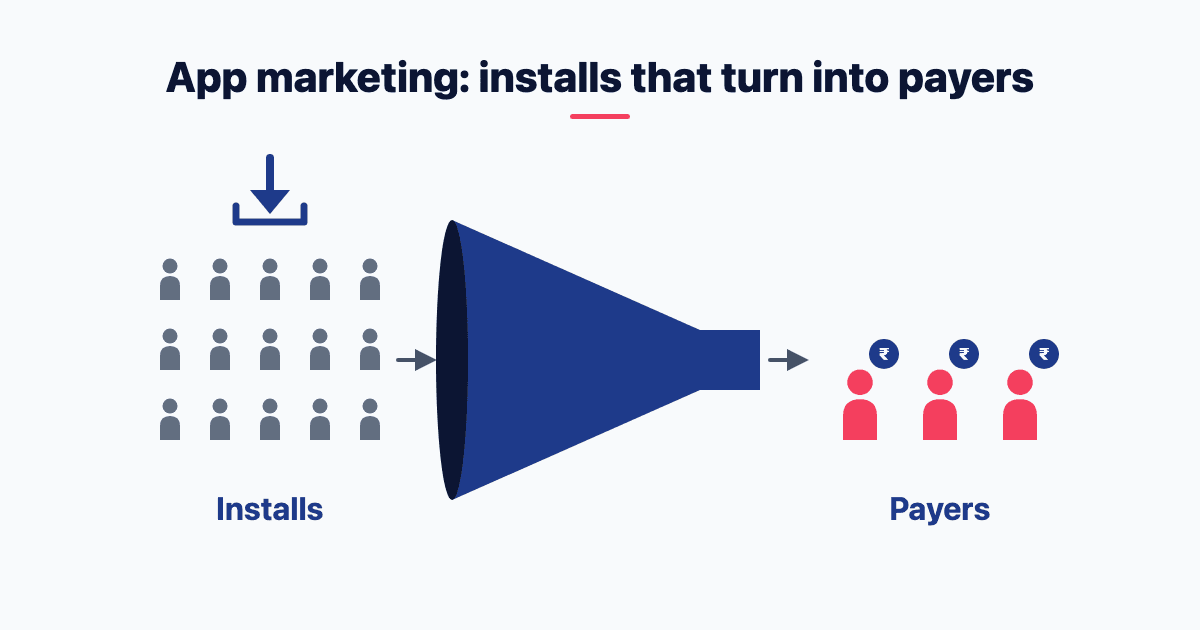
"The era of explosive App volume is over," say Google's India app leads in AppsFlyer's 2025 India report. So an app marketing strategy for India starts at the payer. Build a listing per audience, bid on a payment signal, trace every link and judge cost per payer by cohort.
What is an app marketing strategy, and what changes in India?
An app marketing strategy is the plan for how people find, install and pay for your app, at a cost each step can afford. In India, a mobile app marketing strategy starts from four facts.
Android comes first. "Android holds 94% of installs in 2025", and iOS is "just 6% of installs" (AppsFlyer's India report). Build for Android first.
Install growth has stalled. Installs rose just 3% in 2024, and the report forecasts a 2% fall for 2025.
Budgets are tighter. User acquisition spend fell 15% year on year across the first three quarters of 2025, the same report says.
Most installs come organically, and most don't sign up. One 2026 study looked at 77 India-based app startups (Linkrunner's 2026 India report). The median app got 62.4% of its installs organically and turned 20.4% of installs into sign-ups. It covers apps that one vendor measures, not the whole market.
The gap between installs and payers shows in finance apps, where AppsFlyer found "the rising acquisition has not fully translated into transacting users". Installs are an input; payers are the result. For healthy payer rates, see my guide to free-to-paid conversion.
What does a paying user really cost?
The number that matters is cost per payer. It equals cost per install ÷ (share of installs that sign up × share of sign-ups that pay).
Here's an illustration with made-up round numbers, not benchmarks:
Channel A: ₹15 an install. 15% of installs sign up, and 2% of those pay. That's 3 payers per 1,000 installs, or ₹5,000 a payer.
Channel B: ₹40 an install. 30% sign up, and 4% of those pay. That's 12 payers per 1,000 installs, or ₹3,333 a payer.
The install that costs 2.7 times as much produces a payer for a third less. A cost-per-install dashboard would have moved your money to Channel A.
Fraud makes cheap installs dearer still. AppsFlyer says India's install fraud "averaged 12% of installs" between 2023 and 2025, with finance "consistently above 30%". "Bots still account for over 70% of Android fraud." Strip out fraud-flagged installs before you divide.
How do you increase app downloads on the Play Store without paying for each one?
App store optimisation is the work of getting your store listing found in Play search and chosen once it's seen. Five rules do most of it.
Rule 1. Fix the two lines everyone reads
Google's metadata policy says "Your app title must be 30 characters or less". It bars text or images "that indicate store performance or ranking, price or promotional information" in the title, icon or developer name. So "No. 1" or "50% off" (my examples) stay out.
The short description has an "80 character limit" and is "the first text users see" on your detail page (Play Console Help).
Rule 2. Build one listing per audience
Play allows "up to 50 custom store listing pages" (Play Console Help). Target them by country, "Search keywords", "Ads traffic", "Non-buyers" (installed, never bought) or lapsed users. Or show one to people who arrive "via a unique custom store listing URL, or from a specific Google Ads campaign".
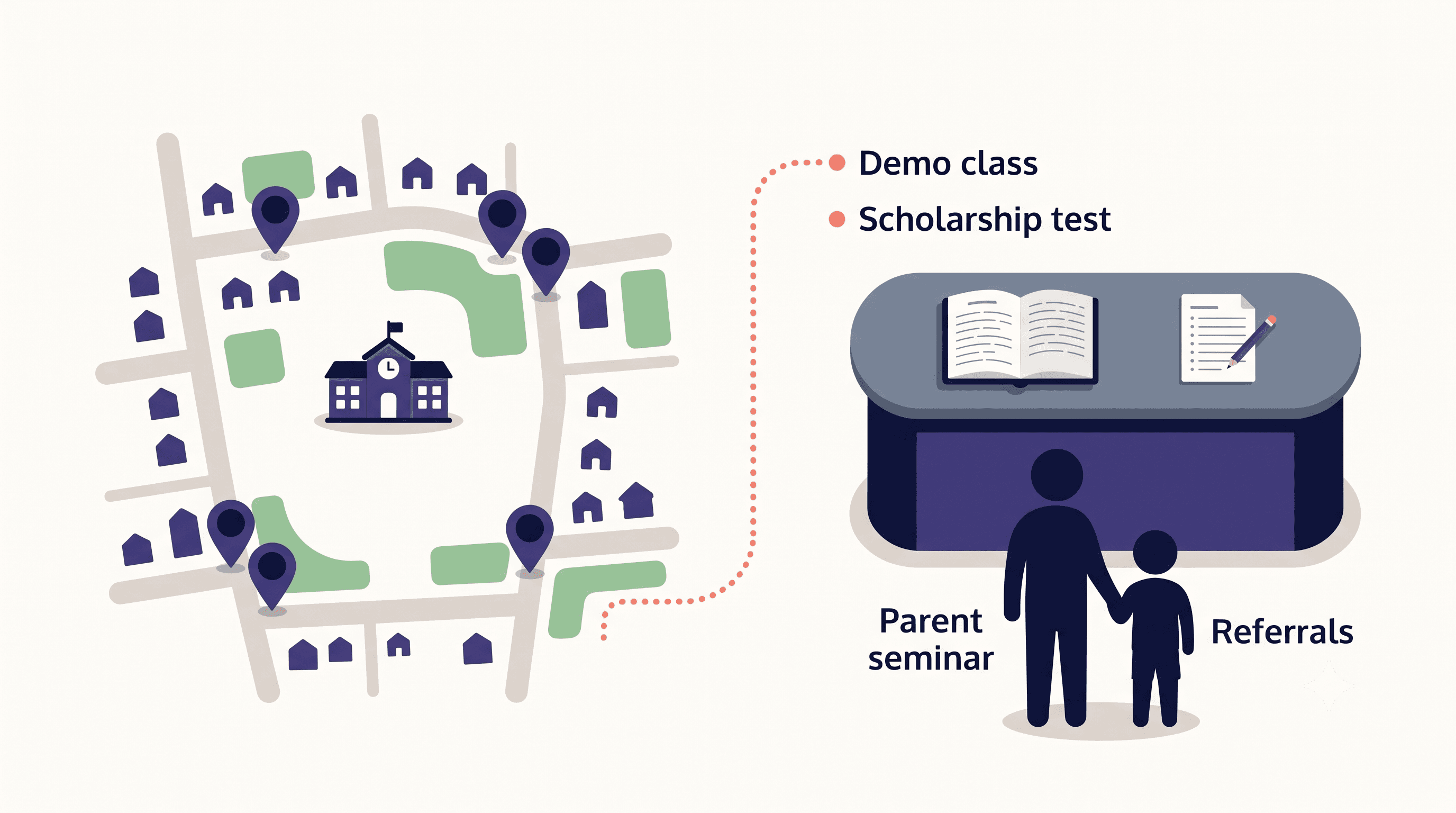
For an Indian app: a listing per exam or course, creator group and language campaign, plus one for non-buyers that sells the paid plan.
In a 2020 blog post, Duolingo shared this lesson from India. Its English Google Play listing was the global default, and it "didn't mention you could learn English at all!" So it "made a custom listing for English in India" (Duolingo's blog).
Rule 3. Get human translations in your users' languages
A translated listing shows only "If a user's language preference matches the translation languages you've added" (Google's translation guide). Play accepts your own Hindi, Marathi, Tamil or Telugu text. But its free machine translation list, checked on 11 October 2026, has no Indian language.
My reading: to reach a Hindi speaker whose phone is set to English, send the Hindi ad or creator link to a Hindi custom listing. One catch: ad-targeted listings are "only currently showing on AdMob", and they "exclude ads on Google Play search" (Google's custom listing guide). Creator links that use the listing's own URL aren't affected.
Rule 4. Test, then check payers before you keep the winner
Play's store listing experiments run on "default and custom store listings". They pick a winner on "Unique user install clicks, Unique user open clicks or Unique user pre-registration clicks". Payers aren't an option, so check a winner's sign-up and payer rates in your own data before you keep it.
Rule 5. Read the reviews first, yours and a rival's
In my Avinash College session sheet, a brand study starts from two free sources: "the brand's Play Store reviews page and the Meta Ad Library". Reviews hand you users' own words and doubts. Just don't buy them. Google Play's ratings policy says "Don't offer rewards or incentives for ratings or reviews."
The store can't be your only engine. At Programming Hub, a global coding-education app where I was CEO, marketing started out "dependent on store placement and organic search". We set one content strategy across two app stores and a course marketplace, "with pricing and catalogue decisions by market". Its 400M+ downloads are cumulative across all three and public; they show scale, not store-work results.
Should App campaigns bid on installs or on payers?
Bid on the earliest action that predicts payment. It's the biggest choice you'll make in paid acquisition.
App campaigns can optimise for "specific actions, such as app installs or in-app purchases". Google's bidding guide offers these main choices:
A target cost per install.
Installs from "users likely to perform an in-app action".
A target cost per in-app action.
A target return on ad spend, "based on the set conversion values for the targeted actions".
Google adds two cautions. Pick one action, or your target becomes a "blended target" for actions "with potentially different values". And "optimizing for frequent actions, like session start, results in a higher number of conversions than usual". Shallow events flatter the campaign.
Which action, then? Google's India app leads say "the first 72 hours" are "critical for capturing high-value signals". Their finance example is "completion of KYC/Payment" (KYC is the identity check). My equivalents: a first mock test in test prep, or a first order in commerce.
If payment is too rare to bid on, bid on a proxy and fix your switch point in advance. My IIT Kanpur session sheet from September 2026 says "a proxy is a bridge only if the graduation trigger is written down". The trigger is "the exact weekly number at which I switch to Purchase". I taught it for Meta ads; it carries over.
For edtech apps, time that switch to the exam calendar in my edtech marketing strategy guide. And plan next year's festive push early. In the week AppsFlyer calls Navratri week (9–15 October 2024), non-organic installs rose 22% over the week before (AppsFlyer and Meta's festive report). The report's advice: launch campaigns "by early October".
Creators, referrals and web links: can you trace which one brought the payer?
Only if every link carries its source through the install. The rule: no untraced link goes live.
Google Play's Install Referrer API returns "The referrer URL of the installed package". It also returns the click time and when "an installation began". So a creator or campaign code in your Play link survives the install.
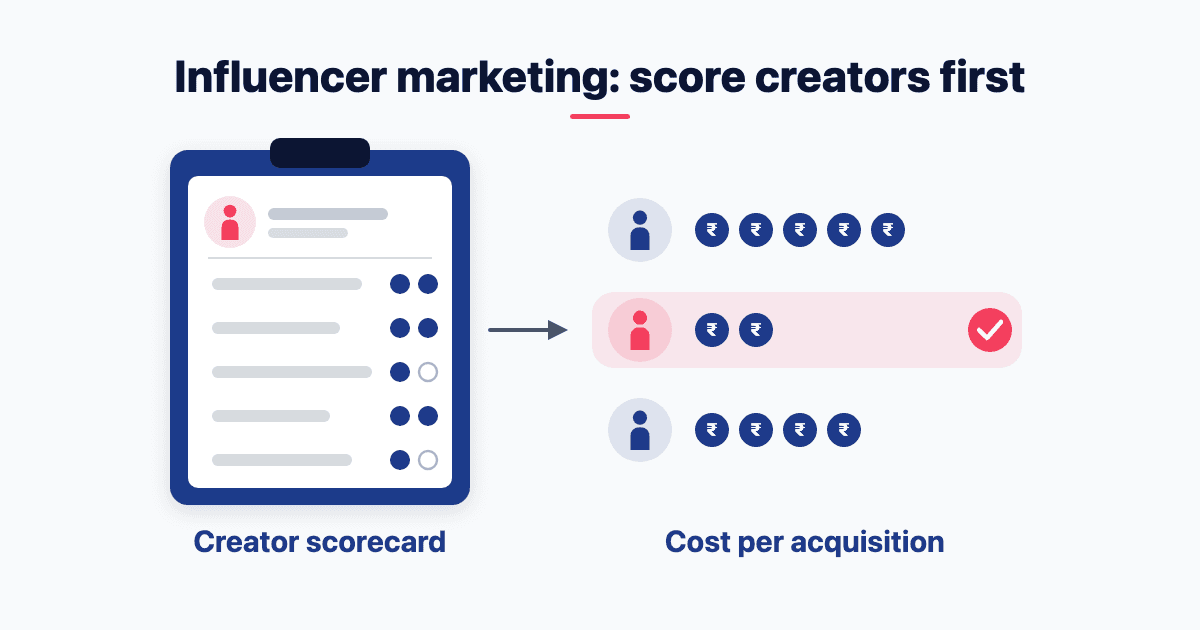
Creators. Give each creator a code in the Play link, and send creator or language groups to a custom listing. With many creators, the 50-listing cap means codes, not a listing each. Judge creators on cost per payer, not views. Picking and contracting them is the wider job of influencer marketing in India.
Referrals. Reward the referrer on the friend's first payment or order, not on the install. Install rewards invite fakes, and bots already make up "over 70% of Android fraud". Never reward a rating or review either (see Rule 5).
Old links. Google set 25 August 2025 as the shutdown date for Firebase Dynamic Links. Its FAQ says "All links served by Firebase Dynamic Links (both hosted on custom domains and page.link subdomains) will stop working". Test every old referral, email and WhatsApp share link.
Web to app. Verified Android App Links open your site's links in your app "without requiring the user to select your app from a disambiguation dialog". They work on "Android 6 and later, on devices that have Google services". So land search and WhatsApp traffic on a web page that works alone, like a free mock test. Give everyone without the app a traced Play link.
How do you read cohorts by city and language?
Read them weekly, because your next users won't look like your first. The Internet and Mobile Association of India (IAMAI) and Kantar's Internet in India 2024 report counted 886 million active internet users in 2024: "Urban India 397 Million, Rural India 488 Million". The top nine metros held 14% of them, smaller metros 9%, towns under 10 lakh population 22% and rural India 55%. IAMAI's 2025 edition, as reported by Tele.net in January 2026, counts 958 million users, 57% of them rural; that coverage gives no town split.
These are 2024 shares of internet users, not of app installs. Still, 86% of internet users live outside the top nine metros. Expect those cohorts to pay at different rates and prices from your metro users.
For each install week, split installs by source (channel, creator, campaign), by IAMAI's four town classes and by language. Then track:
Installs, minus fraud-flagged ones.
Sign-up rate.
Payer rate by day 7 and day 30, on one fixed denominator.
Cost per payer.
Watch the word "organic". In Linkrunner's data, it "can include genuinely organic installs and paid installs that could not be attributed". If organic installs jump in the same week that attributed paid installs drop, while spend holds steady, suspect broken tracking first.
Want this view built for your app? I do it as growth strategy work.
"Our cost per install is the lowest in our category." So why change?
It's fair to be proud of a green dashboard. But the cheapest install is often the most expensive payer. In the illustration above, Channel A cost ₹5,000 a payer against Channel B's ₹3,333. Finance install fraud runs "consistently above 30%". And Google itself warns that frequent, shallow actions inflate conversions.
So keep cost per install as a diagnostic. Run the budget on cost per payer by cohort. Cut the channel that's cheapest per install but dearest per payer.
Your app marketing plan for the next 30 days
Name one payer-predicting event inside 72 hours, and send it to Google Ads.
Read your reviews and a rival's, then rewrite the title and short description.
Build custom listings for your top language, creator groups, major campaigns and non-buyers. For now, ad-targeted ones show only on AdMob.
Run one listing experiment, and keep the winner only if its payer rate holds.
Move App campaigns to that in-app action, with a written trigger for switching to payment.
Replace page.link links, trace every creator and referral link, and pay referral rewards on first payment.
Start the weekly cohort list, and cut the channel with the worst cost per payer.
If your installs are growing and your payers aren't, book a free strategy call. Bring your last eight weeks of installs by source, and I'll help you see which channel is buying payers and which is only buying installs.
Frequently asked questions
How much does app marketing cost in India?
It depends heavily on category. Across ₹22.2 crore of ad spend by 58 India-based app startups, the median paid install cost ₹20.19 (Linkrunner, 2026). The median sign-up cost ₹48.01. Edtech's median install was ₹67.79, but that figure comes from only three apps. It's "not a probability sample". Your real ceiling is what a payer is worth.
Should an Indian app market on iOS, or only on Android?
Start with Android, and treat iOS as a premium test. iOS is "just 6% of installs" but "has doubled its share since 2017". In January–September 2025, its acquisition spend rose 17% year on year; Android's fell (AppsFlyer). Budget more per install there: Google recommends "a bid 1.5 times higher than Android" for iOS (Google Ads Help).
How should a new app market itself before launch?
Open pre-registration, and build your measurement before day one. Google offers "App campaigns for pre-registration". Play can show a custom listing to "Users who can pre-register for your app", and store experiments can target "Unique user pre-registration clicks". Set up your payer-predicting event and traced links before launch, so your very first cohort is readable.
Should you hire an app marketing agency in India?
Hire one for execution if you lack the team, but keep ownership of Play Console, the ad accounts, attribution and the payer event. Judge and pay the agency on cost per payer by cohort, not on installs. For the shortlist, use these questions to ask an agency before you sign.
- Consumer apps
- App marketing
- Installs
Written by Siddhesh Joglekar
Fractional CMO and AI marketing consultant Siddhesh Joglekar helps founders and growth-stage teams build marketing engines that compound.