Marketing
Quick commerce ads for D2C brands: how to buy Blinkit, Zepto and Instamart ads without burning margin
Quick commerce advertising in India means paying Blinkit, Zepto or Swiggy Instamart to place your products higher in in-app search, category pages, carts and banners. You pay per click or per impression, depending on the format, and can target city by city.

· 10 min read
Quick commerce advertising in India means paying Blinkit, Zepto or Swiggy Instamart to place your products higher in in-app search, category pages, carts and banners. You pay per click or per impression, depending on the format, and can target city by city.
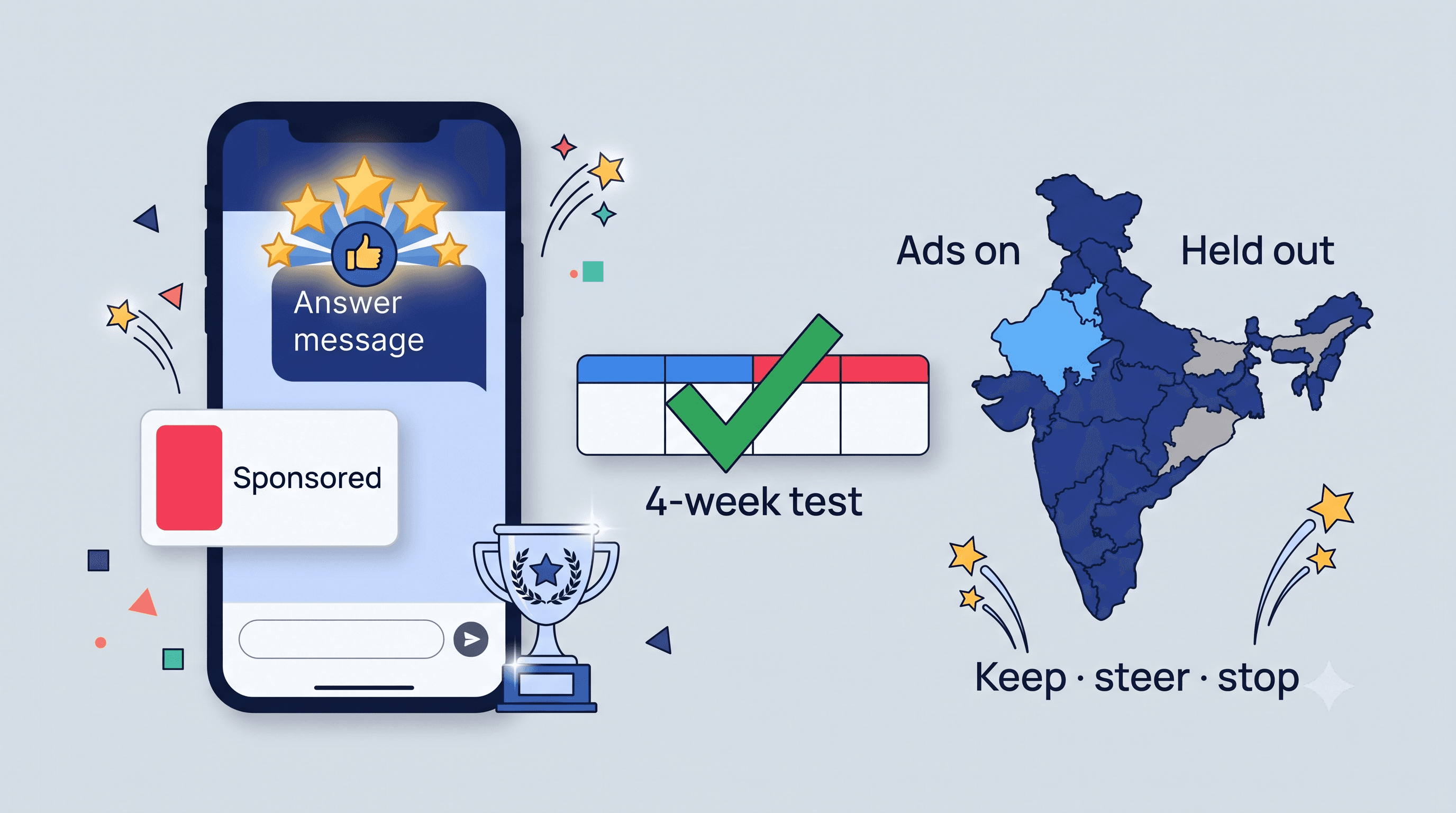
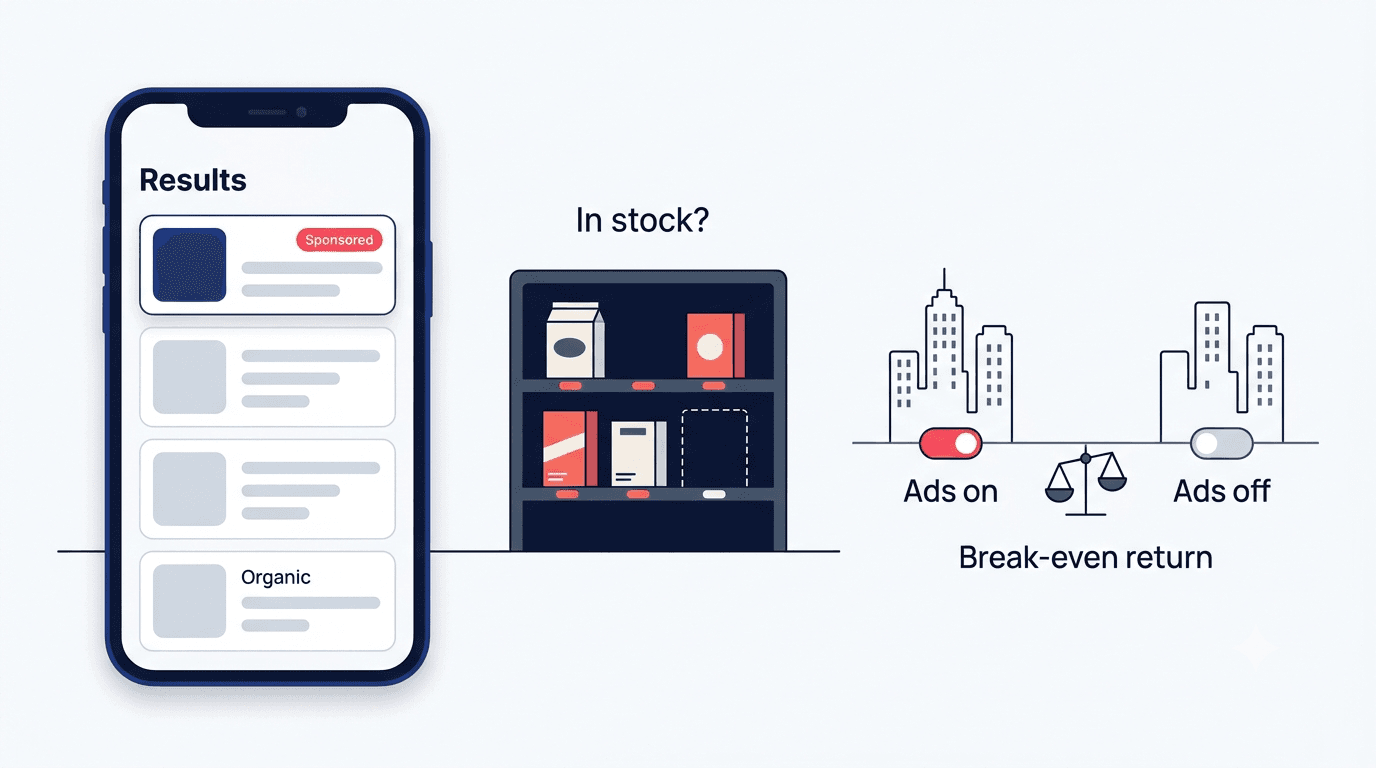
To buy it without burning margin, advertise only where your stock sits in the dark stores. Keep ads on your own brand name apart from ads that win new shoppers. Then judge each campaign on the sales it added, tested with a city holdout, rather than on the return the dashboard reports.
Whether quick commerce belongs in your mix, and what festive placements cost, is covered in the D2C marketing strategy guide. Expect the pitch to get louder: Swiggy lists "Ads revenue: INR 10 per order" among the levers to take Instamart to break-even (Swiggy shareholder letter, July 2026, p.13).
What does quick commerce advertising in India actually buy?
Here is what each app says it sells (checked 30 September 2026). Swiggy publishes no public guide to Instamart's ad products (its brand portal is login-only), so that row comes from a vendor.
Blinkit
Where you buy: Brand Central, "Blinkit's self-serve advertising platform", with 8 ad formats
How you pay: "no fixed minimum"; you pay "for clicks or impressions depending on the format"
Targeting: geography "from pan India to a particular city", shopper cohorts, time of day
What the report shows: impressions, clicks, conversions, return on ad spend and "brand search lift"
Zepto
Where you buy: Zepto's brand portal (login only), an in-house platform per Zepto's draft offer document filed with SEBI (8 June 2026), p.244
How you pay: a "cost-per-click" bidding engine, with keyword suggestions
Targeting: campaigns "at the brand, product and city level" (p.257)
What the report shows: insights into "user behavior, product performance, and geo-level consumption patterns"; Zepto Atom is a paid extra
Swiggy Instamart
Where you buy: the Instamart partner portal (login only). An e-commerce vendor's guide (updated 8 July 2026) lists keyword ads, display ads, item boosts, push notifications and search inline banners
How you pay: not public
Targeting: city-based, per that vendor
What the report shows: not public
If you are asking how to advertise on Blinkit, start at Brand Central. Blinkit ads come in eight types: Prime Banner, Product Booster, Recommendation Ads, Product Shelf, Brand Spotlight, Brand Store, E-com Shelf and Listing Spotlight. There is "no fixed minimum" spend, so the starter budgets that agency guides quote are not a Blinkit rule.
Both apps quote headline returns on ad spend (ROAS). Blinkit's Brand Central page says brands there "see 3.8x average ROAS". Zepto's filing (p.257) cites a return "as high as 5-8 times" from a Redseer report. The filing's own definitions (p.2) say Zepto "exclusively commissioned and paid for" that report. Neither app says how many of those sales would have happened without the ad. (Filing cited for product facts only, not as an investment view.)
Is your stock ready, city by city?
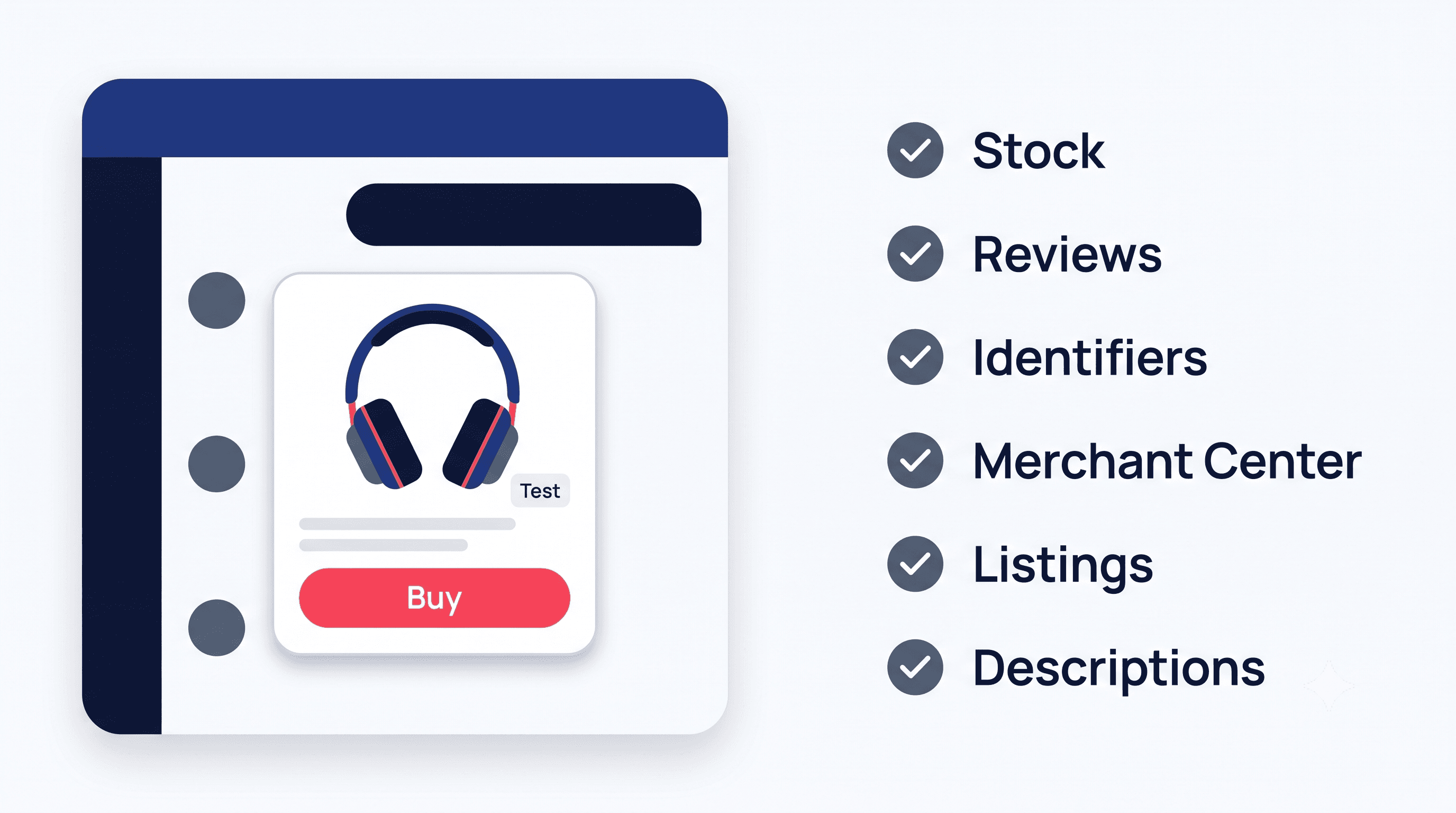
Spend nothing in a city until your top products are in stock in the stores that serve it. Write the bar down. One example, not a benchmark: "top five products in stock in nine of ten stores for two weeks".
An ad can only sell what the store serving that shopper holds, and a stock-out stops paid and organic sales together. Worse, a campaign can empty a store faster than it is refilled, creating the stock-out it cannot serve.
Eternal's results for the April–June 2026 quarter (results PDF, p.26) note that Blinkit, its quick-commerce arm, has been moving "from its marketplace model to a combination of marketplace and inventory-led model" since mid-2025. My inference, not Blinkit's statement: where Blinkit buys the stock itself, your availability can depend on its purchase orders, not only on your dispatches. Ask your account manager for store-level availability before any campaign.
Zepto Atom, a subscription service, gives brands "neighborhood-level market share data in their category" and "live sales data for their products" (Zepto filing, p.244). If sales in one area stop dead while the rest hold, check the shelf before you blame the ad. The Zepto scorecard explains why dark-store forecasting is hard.
Should you pay for your own brand name inside the app?
Run three separate campaigns, each judged on its own terms:
your own brand keywords;
category and competitor keywords;
banners and new-user targeting.
Use the "Exclude searches" option in Blinkit's campaign builder to keep your brand name out of the category campaigns.
A shopper who types your brand name was sent by something else: your Instagram ads, a creator, a friend. The IIT Kanpur session notes on judging Meta ads say: "Never judge Meta on last-click alone. Search takes part of the credit." Blinkit even reports "brand search lift", the same effect inside the app.
In eBay's field experiments, "brand-keyword ads have no measurable short-term benefits" (Blake, Nosko and Tadelis, NBER working paper 20171). Those tests covered US search ads on Microsoft, Yahoo! and Google (published 2014), so treat them as a reason to test, not a verdict.
At OurBus, a US intercity coach operator, the starting point was "no separation between brand and generic demand, so brand traffic flattered everything else". The fix was to split the Google Ads account into six channels and price each one, "so every channel's real contribution became visible". The same split applies inside a quick-commerce app.
Brand spend is not always waste: a competitor can bid on your name and take the slot above you, so test it.
Point category and banner budgets at new shoppers where you can, and judge them on new buyers. Blinkit describes its "New User Targeting" option as "Reach shoppers similar to past buyers", which does not guarantee first-time buyers.
What return on ad spend do you need to break even?
Break-even return is the selling price the dashboard uses, divided by your contribution per unit before ads. The D2C marketing strategy guide shows how to work out contribution per order.
Before you trust the Blinkit ads dashboard, or Zepto's or Instamart's, ask two questions:
Which price does "sales" use: what the shopper paid, or the printed MRP? If it counts MRP and you sell at a discount, the dashboard return runs ahead of the money you earn.
How many days after a click or view does it still count a sale, and for which products: only the advertised one, or anything from your brand?
Guidelines (not law) from two US industry bodies, the Interactive Advertising Bureau and Media Rating Council, say attribution windows "must be disclosed before campaign execution and measurement". They add that "reporting of any halo products being counted for is encouraged to be transparent" (IAB and MRC Retail Media Measurement Guidelines, January 2024, p.27). Neither Blinkit's nor Zepto's public pages state an attribution window (checked 30 September 2026), so ask for it in writing.
A worked example, illustrative, not a benchmark:
Price in the app ₹200, contribution ₹50 per unit before ads: break-even is 200 ÷ 50 = 4×.
The dashboard shows 6× on ₹1,000 of spend: ₹6,000 of sales, or 30 units.
A holdout shows only half of those were extra: ₹3,000, or 15 units, earning 15 × ₹50 = ₹750 of contribution.
Result: you lose ₹250 for every ₹1,000 spent, behind a 6× dashboard.
The rule: the incremental return (3× here) must beat break-even (4×), whatever the dashboard says.
How do you test whether the ads added sales?
Use a city holdout. The retail media guidelines call this a matched-market test, which compares "sales data across two geographic groups" (IAB and MRC guidelines, p.34).
Pair cities with similar store counts, in-stock rates and recent sales trends.
Run ads in one city of each pair and hold the other out for three to four weeks.
Compare the change in total sales (paid plus organic) of the advertised products in both, not ad-attributed sales.
Blinkit's and Zepto's city targeting make this possible without a separate tool.
How big? The IIT Kanpur notes on building the marketing machine give a rule of thumb, taught for Meta retargeting: a holdout needs "~30 conversions in the held-out arm", and when the platform can't randomise, split by "2–3 low-volume states". Here, split by city (more pairs beat one big pair) and count orders of the advertised products.
For brand keywords, a pause test is quicker: switch brand-keyword ads off in one city for about two weeks, and keep them on in a similar city. The same notes call for "40–50 orders in the off-window", so extend it if needed, and judge it by "Count ₹ saved ÷ orders lost", counting all orders of those products, paid and organic. If the rupees saved per lost order exceed your contribution per order, those ads were losing money.
Keep both tests clean: no price change, sale event or stock-out in either city mid-test. The guidelines warn that matching markets alone cannot control for price reductions, display changes or digital coupons.
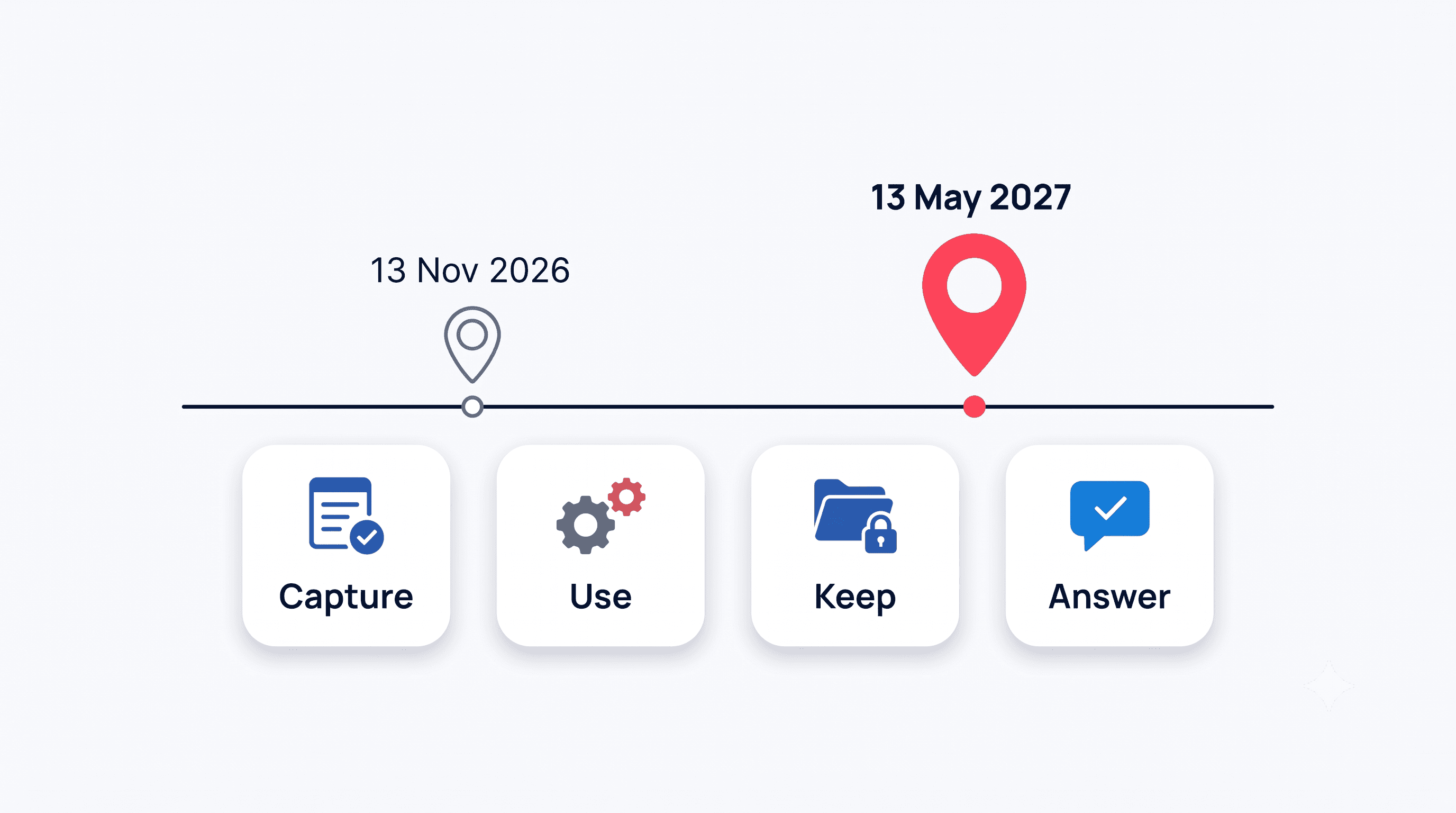
Diwali falls on 8 November 2026 and Dussehra on 20 October (India Post holiday list), so tests started in mid-October run through festive promotions and stock-outs. My suggestion: if you test before Diwali, run only the two-week brand-keyword pause test, finished by the end of October. Pair cities in the same region so festivals hit both alike, and drop any pair where one city runs a sale or stocks out. Otherwise, keep your current rules through the festive weeks and run the city holdout after Diwali.
Whether you run this in-house or through a quick commerce ads agency, ask for the holdout result, not the dashboard return. Setting up and reading these tests is part of the performance marketing work I do.
The objection: "The platform already reports incremental sales"
Blinkit says brands can "attribute incremental sales directly to campaigns and compare paid vs organic performance side by side" (Brand Central, checked 30 September 2026). So why test?
Because the guidelines define incrementality as "the potential causal impact of marketing", measured against a baseline of what would have happened anyway (IAB and MRC guidelines, p.31). Ask the platform whether its incremental figure comes from a control group that did not see the ads. If it does, use that lift study and skip the city test. If it doesn't, it is attribution under another name.
What to do in the next 30 days
Write down the stock bar for each city, and advertise only where it is met.
Build three campaigns (brand; category and competitor; banners and new users) and set excluded search terms.
Work out break-even return per product on the dashboard's price basis, and ask each platform in writing for its attribution window and product rule.
Before Diwali, run at most the brand-keyword pause test; plan the city holdout for after Diwali.
Every week, by city, track total sales of the advertised products (paid plus organic), in-stock rate, and incremental return against break-even.
If you'd like a second pair of eyes on your quick-commerce ad account, or help planning a city holdout for after the festive peak, book a call.
Frequently asked questions
How much do Blinkit ads cost?
Blinkit ads cost what you choose to spend. Blinkit's Brand Central page says there is "no fixed minimum", and you pay "for clicks or impressions depending on the format". For click-price estimates and the Diwali premium, see the D2C marketing strategy guide. Whatever the price, a campaign pays only when its incremental return beats your break-even.
Which app should a D2C brand advertise on first?
Start on the app whose dark stores most reliably stock your top products in the cities you sell in. Don't choose on headline returns. Blinkit's "3.8x average ROAS" and the return "as high as 5-8 times" in Zepto's filing (p.257) don't say how many sales would have happened anyway. Zepto also paid for the report behind its figure.
Do you need an agency to run quick commerce ads?
No, not to start. Blinkit calls Brand Central "Blinkit's self-serve advertising platform", and Zepto sells ads through an in-house platform (Zepto filing, p.244). An agency earns its fee if it runs the stock checks, the brand-keyword split and the city holdout for you. Whoever runs your account, ask for the holdout result, not the dashboard return.
- Blinkit
- Retail media
- Quick commerce
- Marketing
Written by Siddhesh Joglekar
Fractional CMO and AI marketing consultant Siddhesh Joglekar helps founders and growth-stage teams build marketing engines that compound.