Marketing
Can doctors advertise in India? The online mistakes NMC's October 2026 rules now ban, and what to post instead
Can doctors advertise in India? Only facts. The NMC's October 2026 rules clause by clause: 8 online mistakes to fix, what to post instead, and dentist rules.
· 11 min read
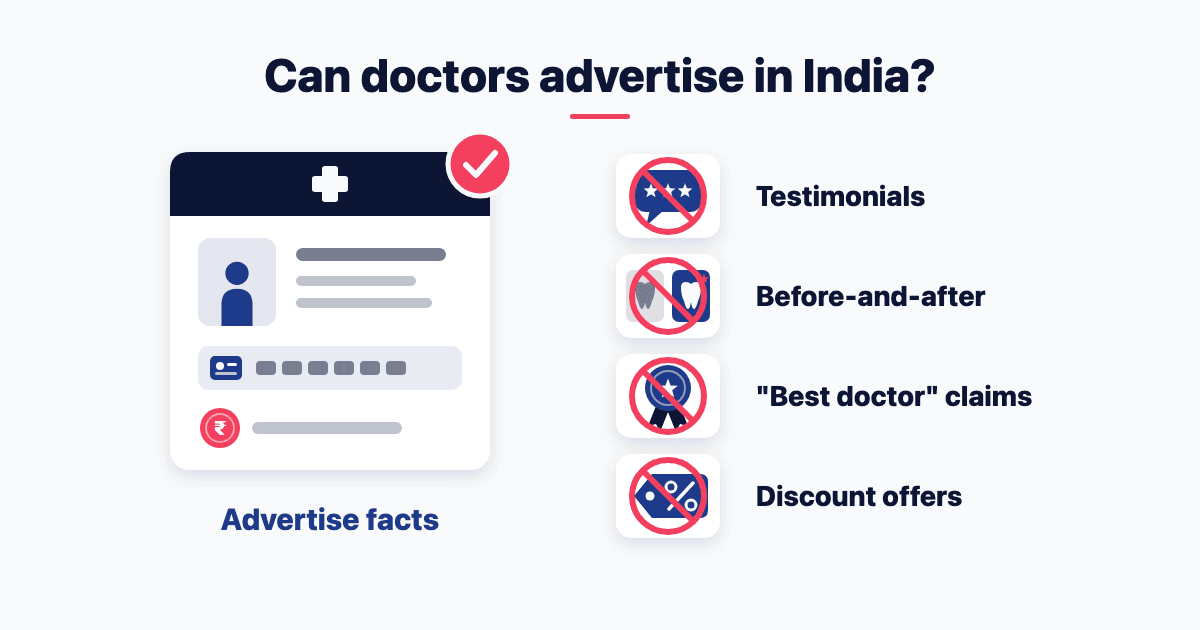
Doctors in India can advertise facts, not themselves. Since 6 October 2026, the National Medical Commission (NMC) guidelines let you publish your name, qualifications, registration number, clinic details and fees. Health education in your own name is fine too. The guidelines rule out testimonials, before-and-after photos, "best doctor" claims, discount offers and paying anyone per patient. Dentists follow their own code.
Checked against the NMC's public notice of 6 October 2026 and the National Dental Commission's advisory of 14 October 2026 on 26 October 2026. This is a plain-English reading of the rules, not legal advice.
What changed on 6 October 2026, and who has to follow it?
On 6 October 2026, the NMC's "Guidelines on Ethical Advertising and Public Communication" came "into force with immediate effect". It framed them "In view of the Writ Petition (Civil) No. 1160/2023 filed in the Hon'ble Supreme Court of India".
They bind registered doctors, and any hospital or clinic where patients are "treated as in-patients or treated as out-patients" (clauses 3.7 and 3.4).
The notice adds digital detail to old rules. It is read with the Indian Medical Council ethics regulations of 2002 (4.2). The commission's own 2023 regulations are "held in abeyance" (Gazette of India, 23 August 2023).
Online posts count. Clause 3.2 treats "digital, social-media, sponsored, targeted, influencer-led, search-engine" and AI-made promotion as advertising. The test is whether the "content or manner of dissemination has a promotional character". WhatsApp is named too (3.5).
So the channel isn't the test. Promotion is. Explanation I to clause 3.2 exempts information shared "without same being promotional and without any intent for commercial benefit". Ask of every post: is this information, or promotion?
Which online mistakes do the rules now ban?
Eight kinds of post need a second look. In each clause, the qualifier often decides the answer.
1. Posting without your name, qualifications and registration number
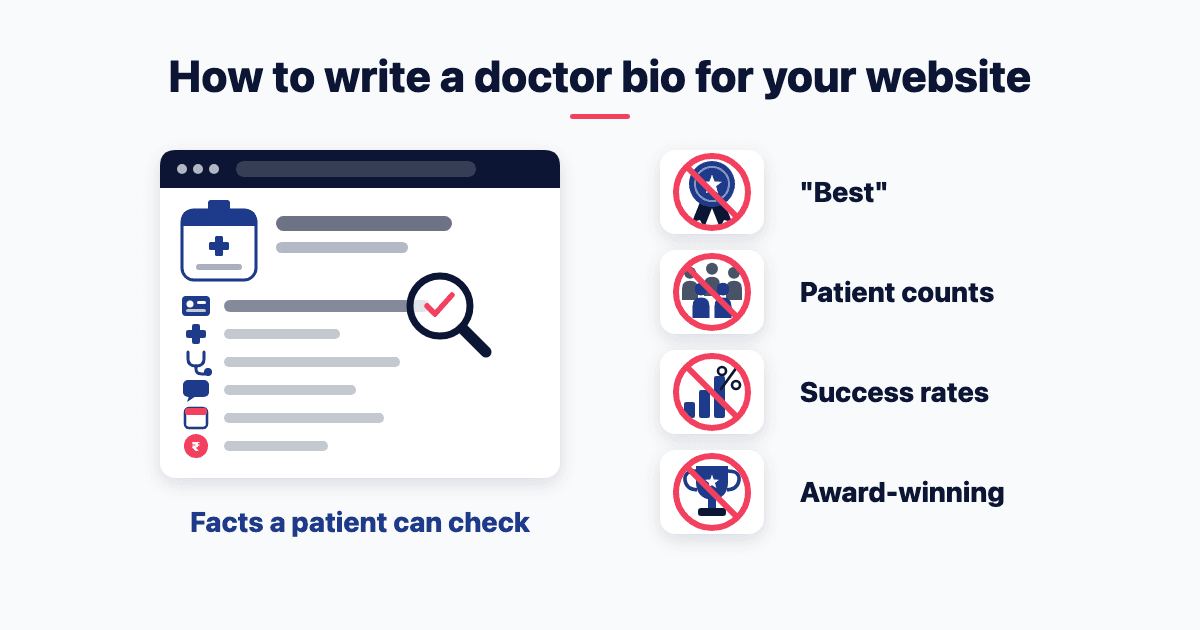
Explanation III to clause 3.2 says doctors' electronic media posts "should transparently disclose their name, qualifications, registration status and SMR/NMR Registration number". Those are the State and National Medical Registers. Explanation IV asks clinics to name the doctor the same way.
Fix: add one identity line to every bio and post template.
2. Asking for, sharing or buying reviews and testimonials
Explanation V bars doctors and clinics from buying or soliciting "fake, paid or misleading patient reviews, ratings, testimonials". Its second sentence goes further: a doctor "shall not request or share patient testimonials, recommendations, endorsements or reviews for professional promotion on social media".
Clause 8.1(xii) bars fake "followers, likes, reviews", and manipulating "search rankings, visibility or algorithms to create a misleading impression of professional standing". Consent doesn't rescue a testimonial either (6.2).
Fix: stop reposting patient praise, and don't ask for or buy reviews. Whether a Google review request counts is open question 2.
3. Before-and-after photos, case posts, filmed procedures and celebrity patients
Clause 8.1(v) bars promotional case posts, "before and after" photographs and celebrity patients. Success stories are out "unless published strictly for scientific or educational purposes with anonymized patient consent". Patient "names, faces, anomalies" stay private (7.4). Live procedure broadcasts must follow the commission's live-surgery rules (7.5).
Fix: use diagrams and general explainers. Where consent is needed, it must be "specific, informed, voluntary, documented and capable of verification" (6.3); see how to collect and record consent.
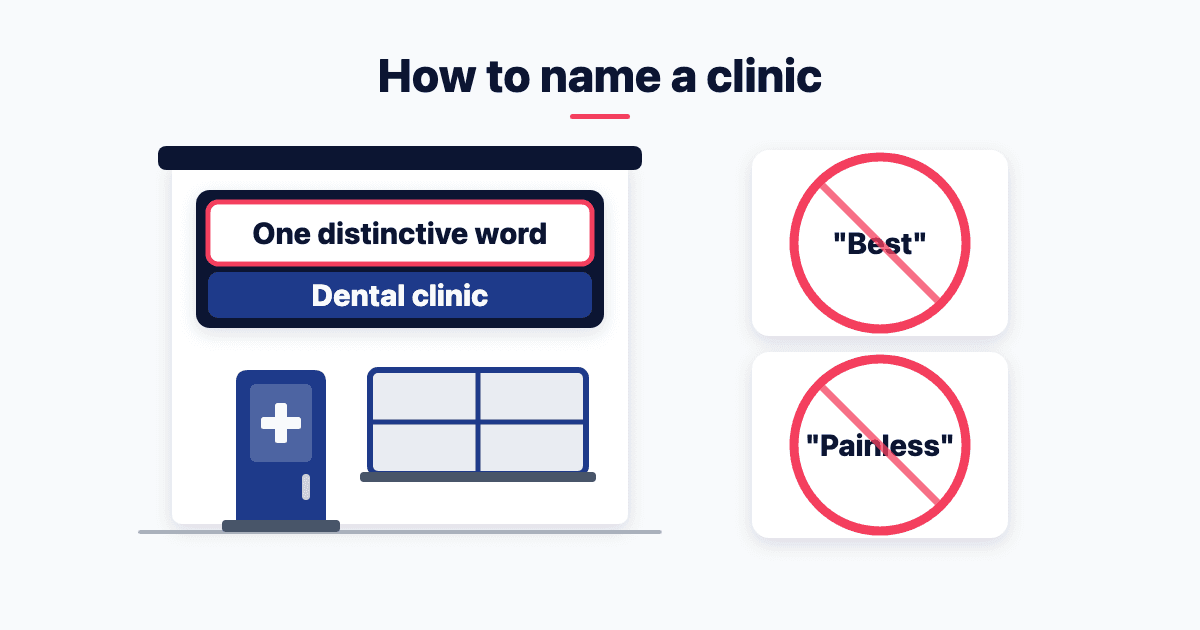
4. "Best", "No.1", "painless", "100% success", and fear
Clause 8.1(iii) lists the phrases it bars: "Guaranteed cures", "Best doctors", "No.1 Specialist", "100% success", "painless treatment", "Miracle treatment", "Exclusive cure". It also bars advertising success rates or the "number of patients treated".
Under 8.1(ix), "best" or "top" must be "objectively verifiable", with a "transparent and independently ascertainable methodology". An award must be "capable of independent verification". Clause 8.1(i) rules out "fear-based marketing".
Fix: state checkable facts. Equipment and facilities are fine without "claims of superiority" (Explanation II).
5. Discounts, offers, free check-ups and referral rewards
Clause 8.1(x) bars "discounts, limited-period offers, contests, coupons, gifts, cashbacks, referral benefits, free procedures or similar inducements". But the ban applies only "in a manner that is likely to encourage unnecessary medical consultation, diagnostic investigation or treatment or otherwise amounts to solicitation of patients". Fees themselves must be "factual, transparent and not misleading".
Fix: publish a plain fee list instead of an offer. Clause 8.2(ii)(g) allows a "Public declaration of charge".
6. Endorsements, in either direction
Clause 8.1(iv) bars endorsing any "drug, medicine, remedy", device or "commercial product". That holds "whether or not monetary or other consideration is received". The reverse is covered too. Under 8.1(xi), no "celebrity, influencer, patient, employee or third party" may promote you "through prohibited testimonials, endorsements or recommendations".
Fix: turn down brand collaborations, and teach without naming products.
7. AI-made promotion, and AI patients or doctors
Clause 7.2 is blunt: "AI Generated promotional campaign for furtherance of commercial interest is prohibited." Compliant AI content "shall compulsorily carry the source mark". AI may not mislead on "professional qualifications, patient experiences" (7.2(a)). Nor may it "create or manipulate a patient's image, testimonial, voice or clinical outcome" (7.2(b)).
When I wrote up AI labels under the IT Rules and the Advertising Standards Council of India (ASCI) on 19 October, I flagged a gap. ASCI's May 2026 draft banned "an AI generated fake doctor promoting a supplement"; the final text dropped it. I wrote: "Don't read that as permission". For doctors, I read 7.2 as settling it: an AI "doctor" selling your clinic is an AI promotional campaign.
Fix: label AI images, video and voice. No AI patients, and no AI doctors.
8. Paying per patient or per lead, or assuming the agency carries the risk
Clause 8.1(vii) bars any "referral fee, lead-generation fee or other consideration" tied to "the referral, recommendation or procurement of patients". Under 8.1(viii), an agency's pay can't be "linked to the procurement or referral of individual patients".
Outsourcing doesn't move the blame. Publishing through an agency doesn't "by itself, absolve" you of content you "authorized, commissioned, sponsored, adopted or knowingly permitted" (4.4). Nor may a third party do it "indirectly" for you (8.1(xi)).
Fix: pay a flat fee, approve every post and keep the record. Read what to ask anyone who markets your clinic. Whether you may hire help at all is open question 1.
What can doctors still post?
Plenty, if it informs rather than promotes:
Health education in your own name. It must "not promote personal practice", solicit patients or be monetised through promotion (5.1). Talks on TV, radio and "electronic media" are fine "in their own name and designation" (8.2(iii)).
Formal announcements: starting practice, a new address or type of practice, absence, resumption and a "Public declaration of charge" (8.2(ii)). Keep them "factual, non-promotional and limited in scope" (9.3).
Clinic facts. "Clinical Establishments may advertise only factual information" (9.1), such as departments, facilities, accreditation and "applicable fees". Posting them too often can still "convert otherwise factual information into solicitation" (8.3(ii)).
Pamphlets for patients in your clinic, with no "guarantee of cure or superiority over others" (8.2(iv)).
To put these facts to work, see the order of work for a clinic's online presence.
What happens if a doctor breaks the rules?
The State Medical Council acts, and the ladder starts gently. Under 10.1, this "graded action may be contemplated":
"First Violation: Warning and mandatory ethics training."
"Second Violation: Censure and monetary penalty."
"Third Violation: Suspension of registration (3-6 months)."
"Serious Violation (Misleading cure claims, inducement for patients, digital mass solicitation, etc.) Suspension of 6-12 months."
"Repeated Violations: Removal from medical register for 1-3 years."
Every penalty needs a show-cause notice and "an opportunity to explain or clarify" first (10.2). You can appeal to the NMC's Ethics and Medical Registration Board "within 60 days" (11.1), then appeal again (11.4). Clinics face the Clinical Establishments Act or their state's law, and the doctor "may separately be examined" (11.5). So fix things now, calmly.
Can dentists advertise in India? What the 14 October advisory and the 2014 Code say
Yes, with more room for the clinic than for the dentist as a person. Dentists answer to the National Dental Commission, "successor in interest to the Dental Council of India" (National Dental Commission Act, 2023, section 59(1)).
Its 14 October advisory's concerns include "publishing patient testimonials and before-and-after photographs", "self-aggrandizing publicity" and "disproportionately large signboards". It points dentists to clauses 8.1, 8.2 and 8.3 of the Revised Dentists (Code of Ethics) Regulations, 2014. A breach may bring a "show-cause notice, suspension or removal" from the register.
The Code lets dentists advertise:
With "decorum" (8.1).
On the internet, without "any claim to superiority or special skills over others" (8.2.8).
On a website listing "treatment facilities available and the fees for the same" (8.2.9).
The dentist as a person may not:
Seek publicity that "would ordinarily result in his self-aggrandizement", or "boast of cases, operations, cures or remedies" (8.2).
Put a "self- photograph" on the letterhead or signboard (8.3.1).
The Code also bars:
Advertising that gains "unfair professional advantage by cold targeting vulnerable groups", such as camps in schools, colleges and old age homes, or handbills (8.1.2). Registered charities giving "fully free dental care" are exempt.
An "agent or canvasser" to obtain patients commercially (8.1.4).
Contact details on public education material "to attract patients" (8.1.8).
Referral commissions (8.6.1).
What do the rules leave open?
These are my readings of the NMC's notice, not its answers, and each leans cautious. The NMC "may issue such clarifications, advisories, standard operating procedures" (clause 12). By 26 October, its What's New list showed none on advertising.
Can a doctor hire marketing help at all? Clause 8.1(ii) bars engaging "any third party for marketing medical services", yet 8.1(viii) and 4.4 assume agencies. For now, anyone you hire should publish only what you could, for a flat fee, with your approval. Take legal advice first.
Does asking for a Google review count? Explanation V covers "social media", which 3.6 defines widely. So don't ask, and don't share.
Is a profile photo "self-advertisement"? Clause 9.2 bars photos used as "self-advertisement, solicitation or promotional publicity". Keep yours off signboards, letterheads and ads. A plain profile photo is the open part.
May a doctor run paid search ads? Clause 3.2 counts "search-engine" promotion. A clinic's factual ad looks allowed (9.1); one promoting you as a person doesn't.
Is a senior-citizen rate a "discount"? List it as a fee, never as an offer (8.1(x)).
Can an education post carry a booking link? Clause 5.1 says don't "promote personal practice". Identity line, yes; booking prompt, no.
Does AI-drafted text need a mark? Clause 7.2(c) wants disclosure where content's artificial nature "may reasonably be material to the audience's understanding". Label AI images, video and voice; plain AI-assisted copy is the open part.
Does the NMC notice bind a dental clinic? Clause 3.4 covers "any recognised system of medicine", but dentists have their own commission. Treat the notice as a benchmark and the 2014 Code as your rulebook.
What to do this week: clean up in order of risk
Fix things in the order the rules rank severity.
First, what 10.1(iv) calls serious: cure claims, guarantees, offers, and bulk WhatsApp promotions to non-patients (my reading of "digital mass solicitation").
Then patient content: testimonials, reposted reviews, before-and-afters and procedure videos.
Then identity lines on every bio and post template.
Then money: move anyone paid per patient or per lead to a flat fee.
Keep a dated note of what you changed. No rule asks for it, but it helps if you're asked to "explain or clarify" (10.2).
Working through this list for a dental clinic, or a clinic with several doctors? I'm happy to help. I'll check your website and Google Business Profile against the October rules. Then I'll set up the facts patients look for: fees, timings and registration details. One flat fee, never tied to patients, leads or bookings. Practising alone? Read open question 1 first: 8.1(ii) leaves hiring help unsettled. Book a call, or see my marketing strategy services.
Frequently asked questions
Why are doctors not allowed to advertise in India?
They are allowed to share facts, but not to solicit patients or promote themselves. The 2002 regulations say soliciting patients "is unethical" (regulation 6.1.1). The NMC's notice lists its aims, including to "Prevent commercialization of health care" and "Protect patient interest and prevent misleading medical claims". Fees, qualifications, announcements and health education remain allowed.
Does a doctor's registration number have to be on prescriptions?
Yes. Regulation 1.4.1 of the 2002 regulations puts it "in his clinic and in all his prescriptions, certificates, money receipts". Regulation 7.3 makes not displaying it misconduct. Dentists have the same rule (Code 3.4.1). A National Dental Commission notice of 23 October 2026 requires the "Active Registration Number" on every prescription, paper or electronic.
Can doctors advertise on TV?
Not to promote themselves, but they can teach on air. The NMC's notice names "Television" and "Radio" as media of advertisement (3.5), so the same bans apply there. Doctors may give public-health "lectures or talks" on television "in their own name and designation, without promoting their employer organization" (8.2(iii)). A clinic's TV ad must stick to facts (9.1).
Is the 2014 Dentists Code still in force under the National Dental Commission?
Yes, for now. The National Dental Commission Act keeps the old regulations in force "till new standards or requirements are specified" (section 59(2)). The commission's regulations list still shows the 2014 Code. The National Dental Commission Rules, 2024 cover how the commission itself is appointed and paid, not dentists' ethics.
- NMC guidelines
- Healthcare advertising
- Doctors
Written by Siddhesh Joglekar
Fractional CMO and AI marketing consultant Siddhesh Joglekar helps founders and growth-stage teams build marketing engines that compound.