Why AI agents might be a huge opening for Marketers and Founders since SAAS
SaaS sold software by the seat. Agents sell the work itself — and the budget they target is labour, not licences. India's edge isn't the model; it's owning the workflows the world is about to automate.

· 6 min read
SaaS sold software by the seat. Agents sell the work itself — and the budget they target is labour, not licences. India's edge isn't the model; it's owning the workflows the world is about to automate.
Here is the sentence to internalise before you read another agent demo: SaaS sold you software by the seat; agents sell you the work. That is not a feature upgrade. It is a change in what is being bought — and it moves the addressable budget from the software line of the P&L to the far larger labour line. For Indian founders, who already run the planet's back office, that shift is the most favourable structural opening since the cloud arrived. It is also the easiest one to fumble.
Let me make the case, then name the three ways Indian founders are advantaged and the three ways they throw it away.
What Actually Changed: From "Helps You Work" To "Does The Work"
━━━━━━━━━━━━━━━━━━━━━━━━━━━━━━━━━━━━━━━━━━
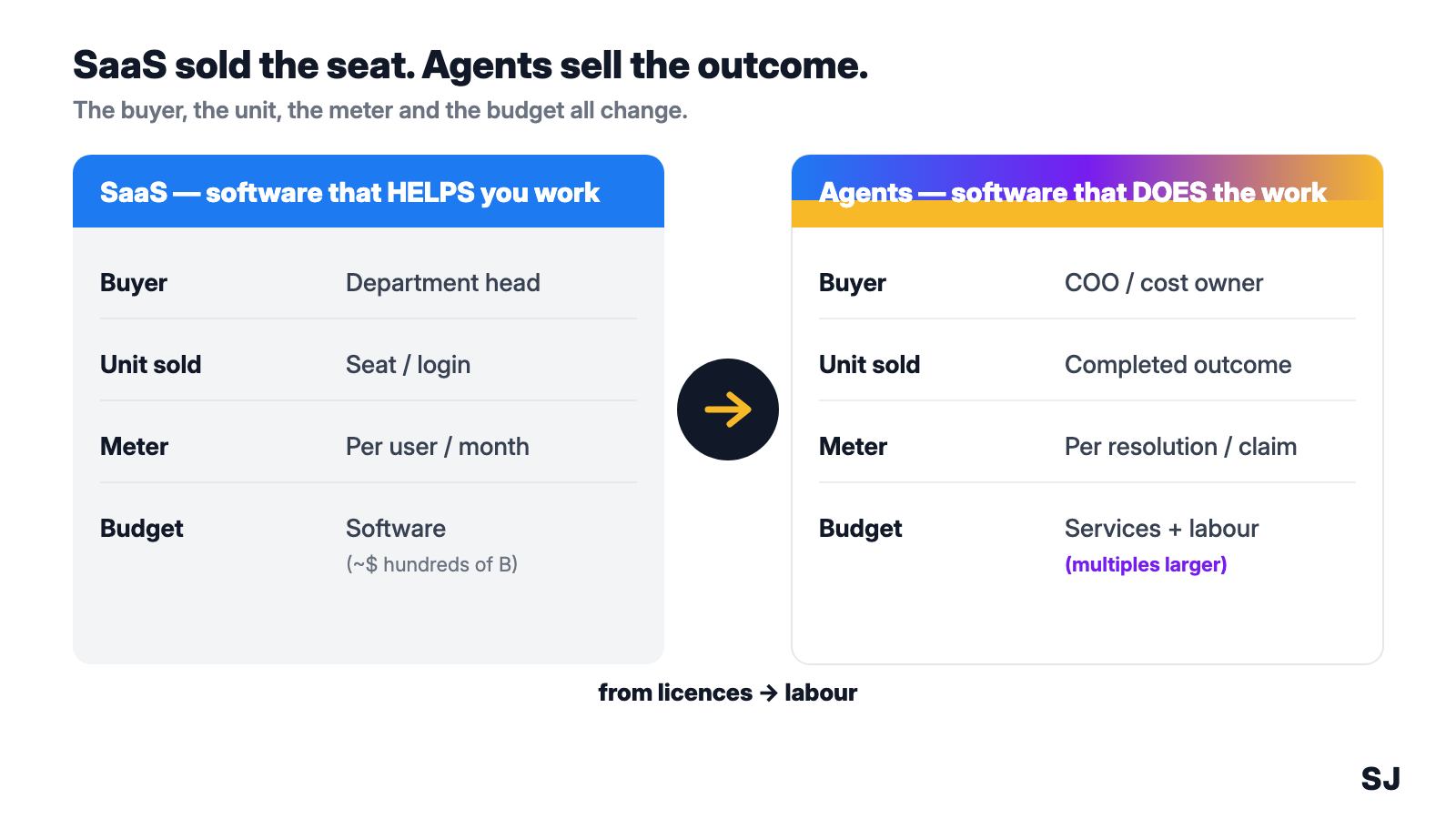
SaaS was a packaging revolution. It took software that used to live on a server in your office and rented it to you per user, per month. The genius was the business model, not the intelligence — Salesforce, Zoho, and Freshworks didn't do your sales for you; they gave your salesperson a better surface to do it on. The buyer was a department head. The budget was the software budget. Globally that pool is real but bounded — on the order of a few hundred billion dollars a year.
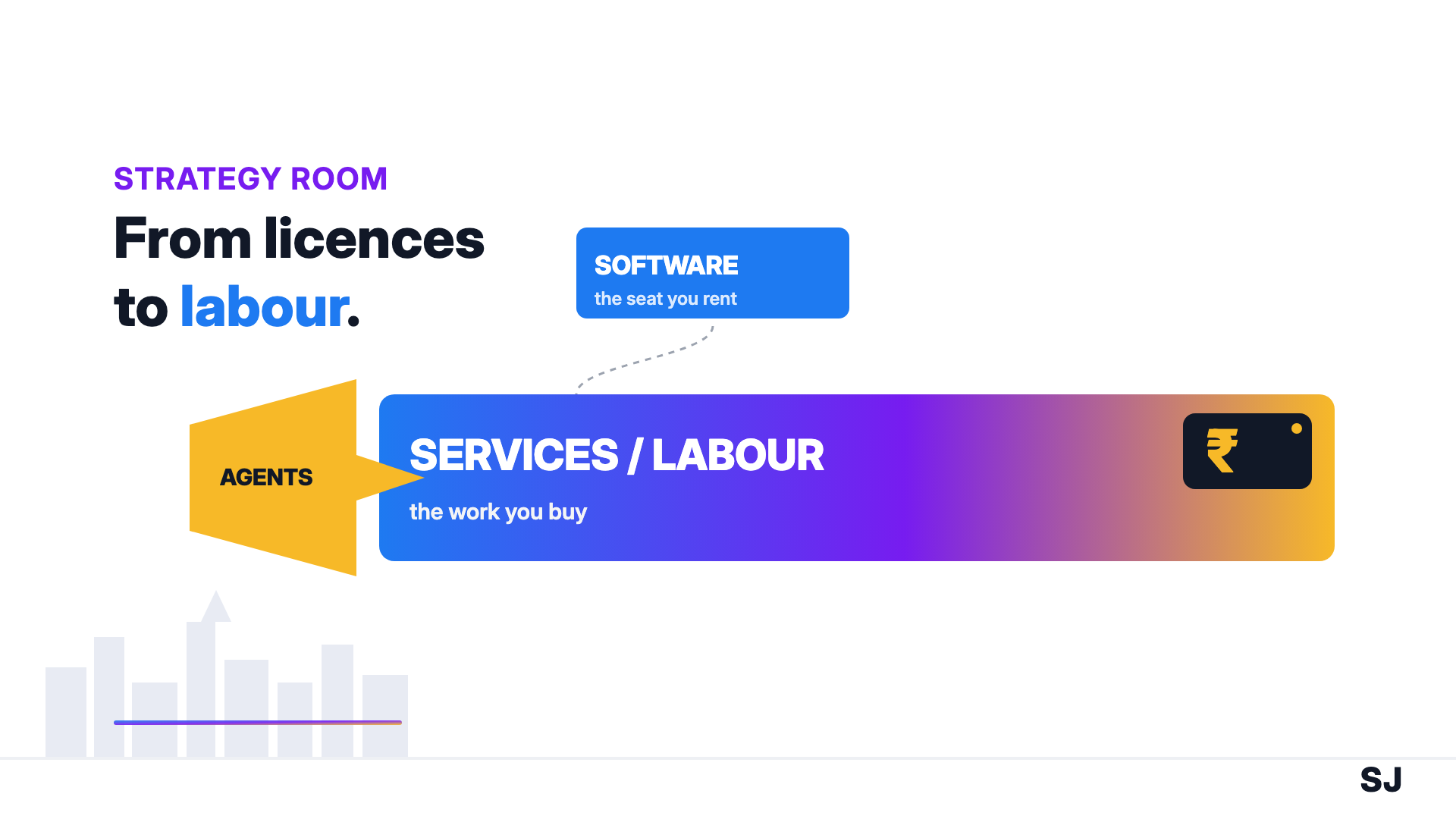
Agents break that frame. An agent doesn't give your collections analyst a better dashboard; it works the overdue accounts, drafts the dunning notices, reconciles the payments, and escalates the three that need a human. The unit you are selling is no longer access to a tool — it is a completed outcome. And the moment you sell outcomes, you are no longer competing for the software budget. You are competing for the SERVICES AND SALARY budget — a pool many times larger than all of SaaS.
That is the whole opportunity in one line: the TAM moved from licences to labour. SaaS digitised the tool. Agents digitise the task. The second pool dwarfs the first.
Why This Is Bigger Than The Last Platform Shift
━━━━━━━━━━━━━━━━━━━━━━━━━━━━━━━━━━━━━━━━━━
Every platform shift — PC, web, mobile, cloud — let software reach a new surface. Agents do something different: they let software absorb a category of work that software previously could only assist. The closest historical rhyme is the original SaaS wedge, which collapsed packaged enterprise software into subscriptions and minted a generation of companies. This collapse is one layer deeper. It collapses services into product — the thing consultancies, BPOs, and back-office teams sell as billable hours becomes a piece of software you buy by the resolved ticket, the processed claim, the closed book.
"Services-as-software" is the ungainly name for it, and it is the most important two-word phrase an Indian founder can hold in 2026. Because if the prize is the services budget, then the people who understand services delivery at industrial scale start the race ahead.
India's Three Structural Advantages
━━━━━━━━━━━━━━━━━━━━━━━━━━━━━━━━━━━━━━━━━━
1) We own the workflows the world is about to automate. India's IT and business-process industry runs well over $250B in annual revenue and employs north of five million people doing precisely the work agents now target — claims, reconciliation, support, KYC, testing, content ops, collections. The model is a commodity you rent; the defensible asset is knowing exactly how a US health insurer adjudicates a claim or how an Indian NBFC sequences a collections call. The moat is the process, not the prompt.
2) Bharat is a training ground no one else has. India's own market — multilingual, regulation-dense, SMB-heavy, low-ARPU — forces an agent to be cheap, robust, and vernacular from day one. Build a collections agent that survives Tier-2 India in Hindi and Marathi and you have built something that ports up-market, not down. The constraints that look like a disadvantage are the feature.
3) The cheapest place to build and to run. India has the largest pool of agent-capable engineers anywhere, and the GCC wave has put frontier tooling in their hands at salaries that make a 10-person Indian agent startup cost what a 2-person Bay Area one does. The catch: inference is dollar-denominated, and after the frontier labs list, subsidised tokens get a clock on them. Build with token cost as a first-class P&L line.
The Three Ways Indian Founders Lose It
━━━━━━━━━━━━━━━━━━━━━━━━━━━━━━━━━━━━━━━━━━
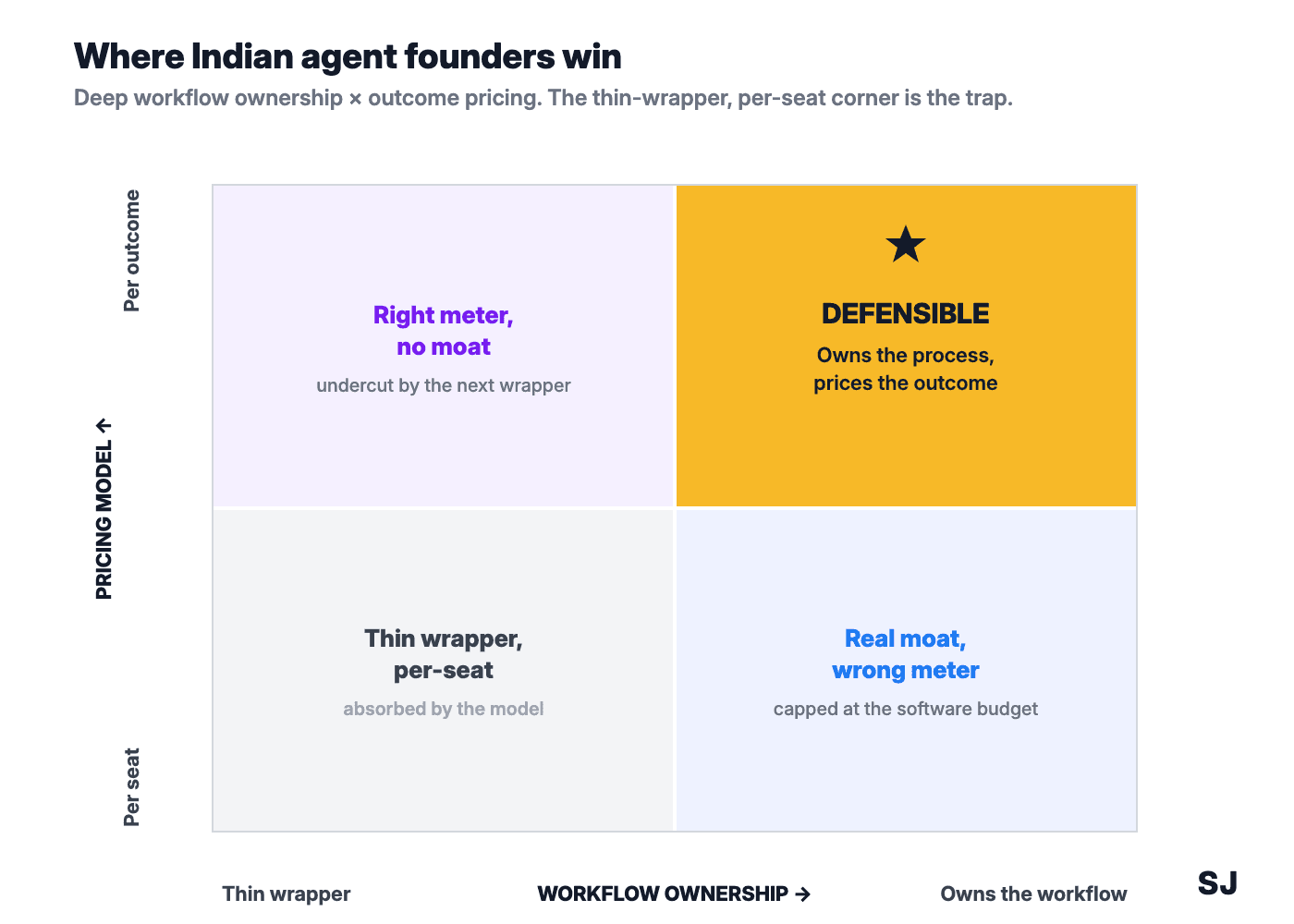
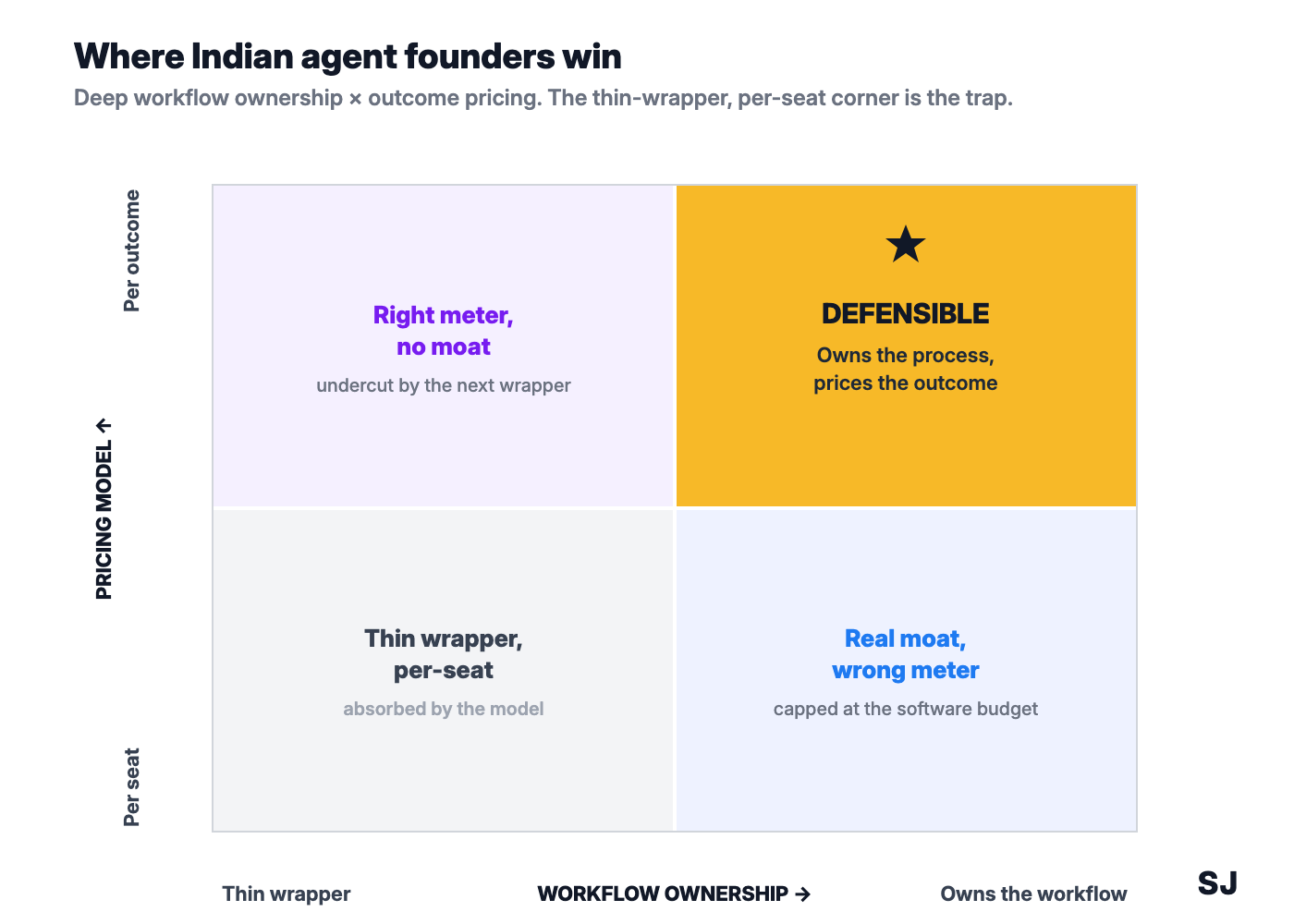
1) The thin wrapper. A prompt and a UI on top of someone else's model is not a company; it is a feature waiting to be absorbed. If your product disappears when the base model ships one more capability, you don't have a moat — you have a countdown.
2) Pricing the new thing with the old meter. Selling an outcome agent per seat leaves the entire prize on the table. If the agent does the work of four analysts, the buyer's reference price is four salaries, not four logins. Price per resolved outcome — per book closed, per claim processed.
3) Waiting for the incumbent to move first. The Indian IT-services giants will not lead this. Their business is billing for headcount; an agent that does the work of fifty people attacks their own revenue model. That reluctance is the founder's entire opening.
What To Do This Quarter
━━━━━━━━━━━━━━━━━━━━━━━━━━━━━━━━━━━━━━━━━━
▸ Pick one painful, repetitive, high-volume workflow you understand cold. One task, one buyer, one outcome you can price.
▸ Instrument the outcome before you build the agent. You cannot sell per-resolution if you cannot measure resolution.
▸ Write the unit economics in rupees and dollars: revenue per outcome minus inference cost per outcome is your real gross margin.
▸ Sell against the salary line, not the software line. Your buyer is the COO who owns headcount, not the IT head who owns tools.
The companies that defined the SaaS era were not the ones with the best code. They were the ones who saw, earliest, that software had become something you rent rather than own, and who priced and sold for that world. The agent era rewards the same clarity one layer down — and this time the people who understand the work being automated, in every Indian language, are sitting in Bengaluru, Pune, and Gurugram. The opening is theirs to take or to wrap.
│ SaaS let you rent the tool. Agents let you buy the outcome — and the country that runs the world's back office should be the one selling it, not the one being automated by it.
━━━━━━━━━━━━━━━━━━━━
#AI #AIAgents #IndianStartups #StrategyRoom #ServicesAsSoftware
Written by Siddhesh Joglekar
Fractional CMO and AI marketing consultant Siddhesh Joglekar helps founders and growth-stage teams build marketing engines that compound.