₹1,900 A MONTH: WHAT AN INDIAN OPERATOR CAN ACTUALLY SHIP ON A $20 CLAUDE OR CHATGPT PLAN
The most over-asked question in Indian boardrooms this year is "which enterprise AI platform should we buy?" The most under-asked is "what can one person already ship on the ₹1,700-1900 plan sitting unused in our subscriptions?"

· 4 min read
Forget the enterprise pitch. One $20 seat, used with discipline, replaces a junior analyst's worth of output — if you know its ceiling and where the GST and data-residency lines fall.
The most over-asked question in Indian boardrooms this year is "which enterprise AI platform should we buy?" The most under-asked is "what can one person already ship on the ₹1,700-1900 plan sitting unused in our subscriptions?" Start there. A single $20/month seat — Claude Pro or ChatGPT Plus — in the hands of a disciplined operator does the output of a junior analyst, this quarter, with no procurement cycle. The catch is that almost nobody uses it past the chatbot layer, so the seat gets written off as a toy. Here is what it actually ships, where it hits a wall, and the two India-specific lines you must get right.
What The ₹1,700 Actually Buys
━━━━━━━━━━━━━━━━━━━━━━━━━━━━━━━━━━━━━━━━━━
Both Claude Pro and ChatGPT Plus list at $20/month (each offers an annual plan around $17/month equivalent). At roughly ₹85 to the dollar that is about ₹1,700 sticker — but the all-in number for an Indian buyer is higher, and that matters for how you expense it.
For the money, the 2026 versions of both give you the same shape of capability: priority access to the frontier model with generous-but-capped daily usage, file and image upload, spreadsheet analysis, a reusable-workspace layer (Claude's Projects, ChatGPT's custom GPTs), web browsing, voice, and working code artefacts you can run. The differences are at the margin. What you do with the seat matters entirely.
Five Things One Seat Ships This Quarter
━━━━━━━━━━━━━━━━━━━━━━━━━━━━━━━━━━━━━━━━━━
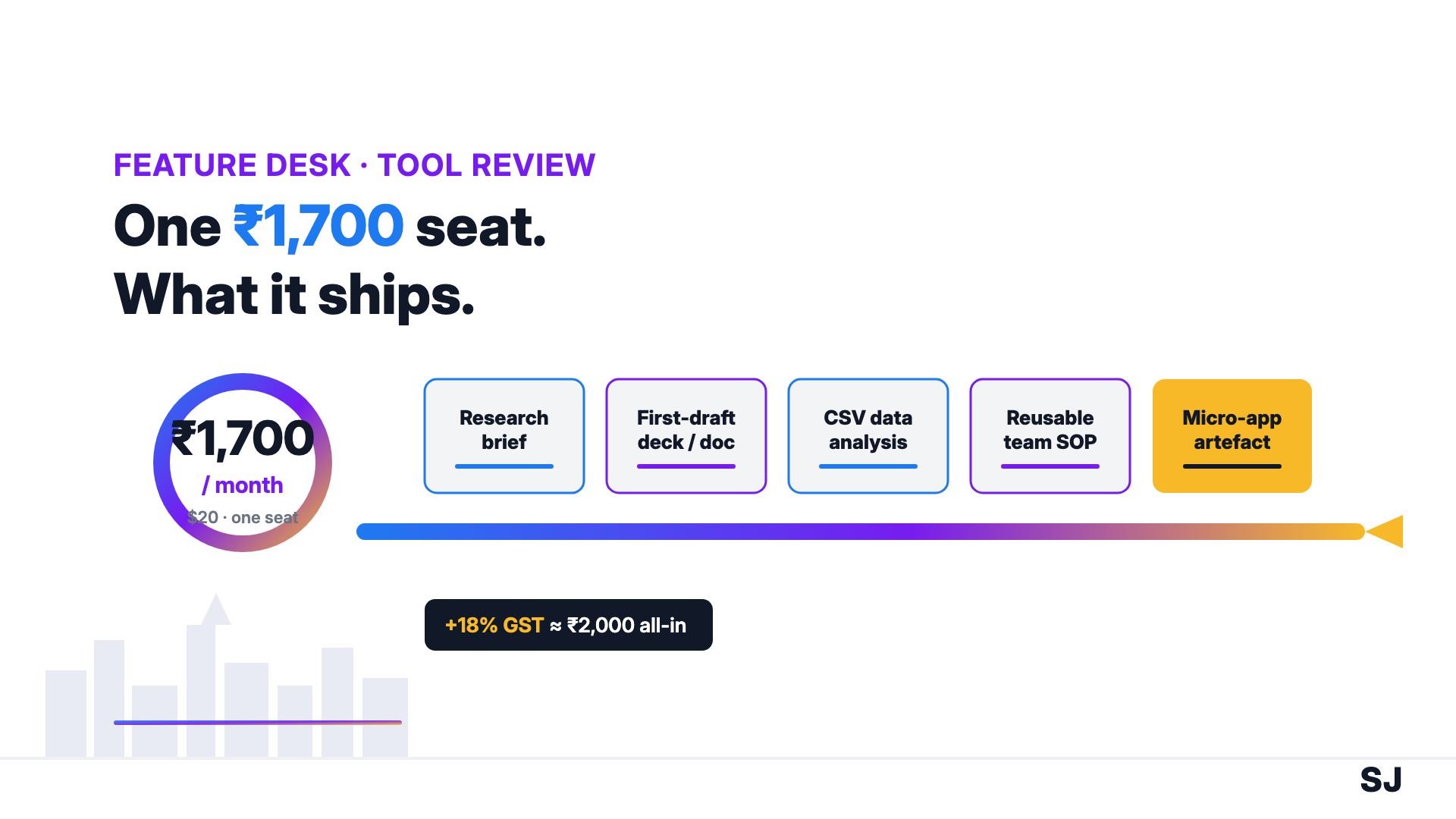
Treat the plan as a junior who never sleeps and works for ₹1,700:
▸ A research-and-brief engine. Drop in an annual report or a tender document and get a structured brief in minutes, not the half-day a manager would burn. Highest-ROI use, least reached.
▸ First-draft documents that are 80% done. Board notes, an MSA redline, a deck outline, a policy SOP. The model removes the blank-page tax — where the hours actually go.
▸ No-code data analysis. Upload a CSV of last quarter's sales or ad spend and ask plain-English questions. A junior-analyst pass on your own data without opening Excel. Verify the numbers you act on.
▸ A reusable team asset. Encode your brand voice, qualification checklist, or hiring screen into a saved Project or custom GPT, and your whole team runs the same SOP off one seat's logic. An internal tool, no code.
▸ Light software artefacts. A ROI calculator, a landing-page mock, an internal dashboard — the plan writes and runs small working apps. Genuinely useful internal utilities.
Do these five with intent and the seat pays for itself many times over in the first week. That is arithmetic against one analyst-hour.
Where The ₹1,700 Plan Hits Its Ceiling
━━━━━━━━━━━━━━━━━━━━━━━━━━━━━━━━━━━━━━━━━━
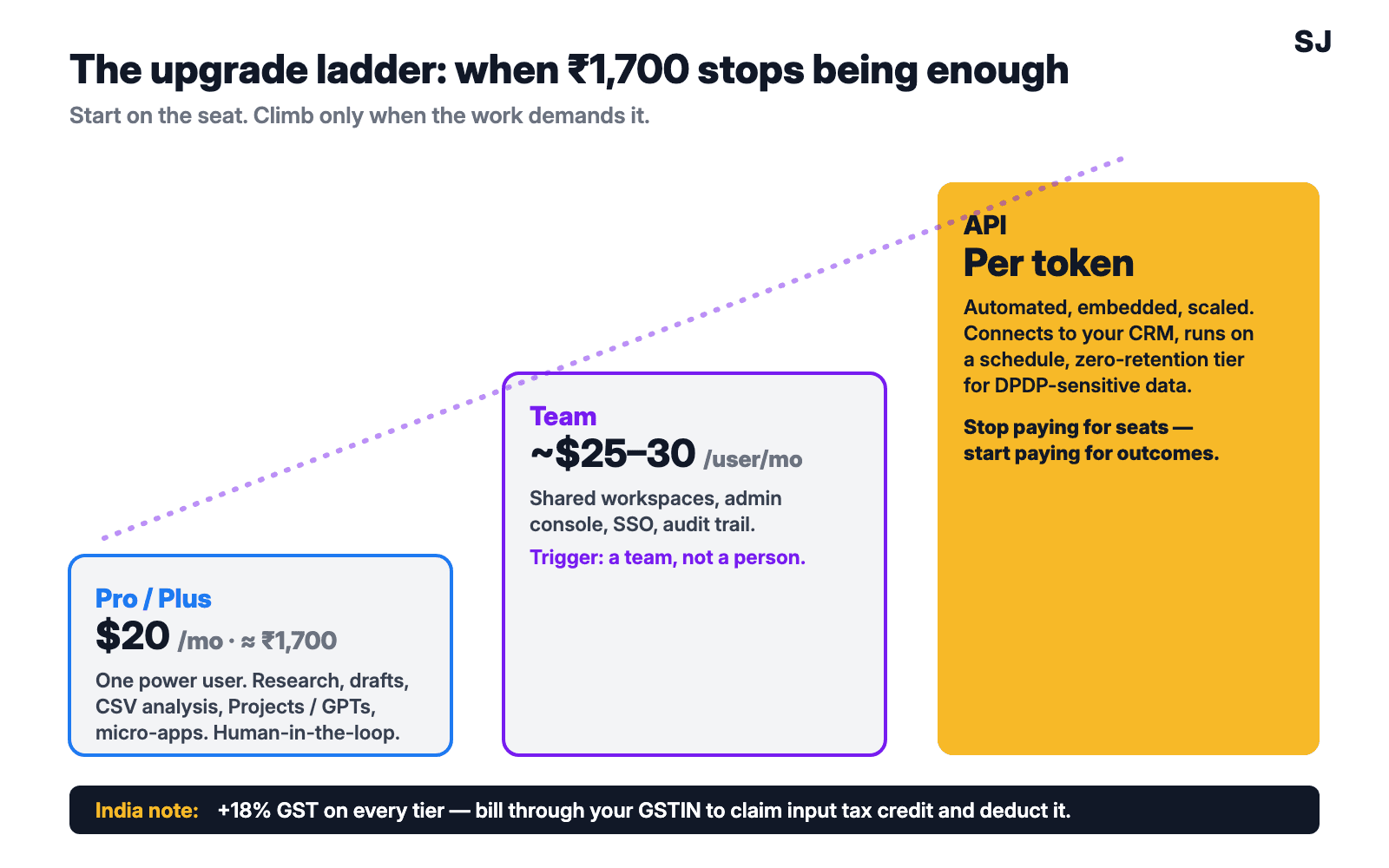
▸ Usage caps, not unlimited. Heavy back-to-back sessions hit a rolling limit and throttle you for a few hours. Fine for one operator; a hard stop for a team on one login.
▸ No automation or integration. A $20 seat is human-in-the-loop. It won't connect to your CRM or run on a schedule. The moment you want "do this to every new lead automatically," you've entered API territory — a different, usage-metered bill.
▸ No team controls or shared billing. No admin console, no SSO, no audit trail. Sharing one login violates terms and gives you zero governance.
▸ Consumer-grade data handling. The one that bites in regulated India.
Upgrade ladder: one power user → Pro/Plus ($20). A small team → Team (~$25–30/user/month). Anything automated or scaled → API, billed per token, where you pay for outcomes, not seats.
The Two Lines India Must Get Right
━━━━━━━━━━━━━━━━━━━━━━━━━━━━━━━━━━━━━━━━━━
GST TREATMENT. A foreign-billed AI subscription is an import of digital services, so 18% GST applies on top of the sticker. Your ₹1900 is closer to ~₹2,100 all-in. Subscribe under your business GSTIN, not a personal card: a registered business claims that 18% back as input tax credit, and turns a personal expense into a deductible business one. Operators paying on a personal UPI leave the ITC on the table every month.
DATA RESIDENCY. Both providers process consumer-plan data on US infrastructure, with no India-residency guarantee on the $20 tier. Under the DPDP Act, that makes the consumer plan the wrong place for customer PII, patient records, or KYC documents. Use it freely for your own analysis, drafts, and research; do not paste a customer database into it. When the workload is sensitive, the answer is the enterprise/API tier with a zero-retention commitment.
The Verdict
━━━━━━━━━━━━━━━━━━━━━━━━━━━━━━━━━━━━━━━━━━
For an individual operator, founder, or manager, the $20 plan is the highest-return software purchase available in India right now — provided you bill it through your GSTIN and keep regulated data out of it. It won't run your company or replace a platform decision. It will, reliably, do a junior analyst's worth of thinking and drafting for the price of two restaurant meals. The mistake is not over-spending on it; it is under-using the one you already pay for.
│ The question isn't whether ₹1,900 of AI is worth it — it's whether you're using the ₹1,700 plan like a chatbot or like the cheapest analyst you'll ever hire.
━━━━━━━━━━━━━━━━━━━━
#AI #ClaudeAI #ChatGPT #IndianBusiness #FeatureDesk
Written by Siddhesh Joglekar
Fractional CMO and AI marketing consultant Siddhesh Joglekar helps founders and growth-stage teams build marketing engines that compound.